
The Black Bat Flower: A Yam Relative Dressed for a Funeral
The black bat flower (Tacca chantrieri) is a Southeast Asian yam relative with bat-wing bracts and long whiskers. Facts, care, and the white bat flower.
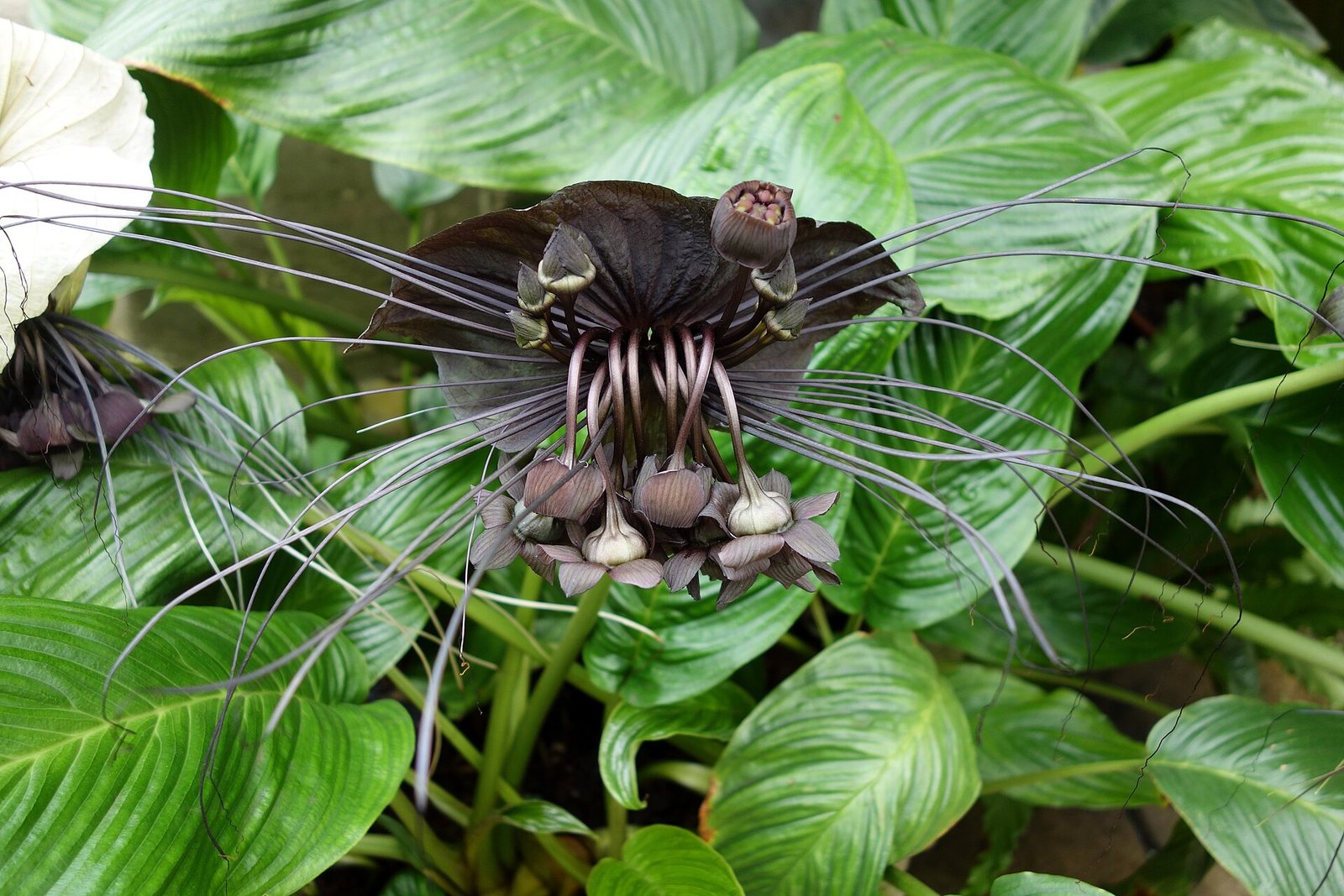
The black bat flower (Tacca chantrieri) is a tropical perennial from the forests of Southeast Asia and southern China. Its near-black flower cluster sits between two wide, wing-like bracts and trails whiskers up to 8 to 10 inches long, so the whole thing looks like a bat in mid-flap. Odder still, it belongs to the yam family, Dioscoreaceae.
Exhibit five in the cabinet arrived looking as if it had been to a funeral and stayed for the wake. It is the color of a bruise on a plum, it hangs its head, and it has whiskers it did not ask for. Visitors usually ask whether it is real. It is, and it is not even very rare: you can grow one on a bathroom windowsill if you are patient and the bathroom is warm.
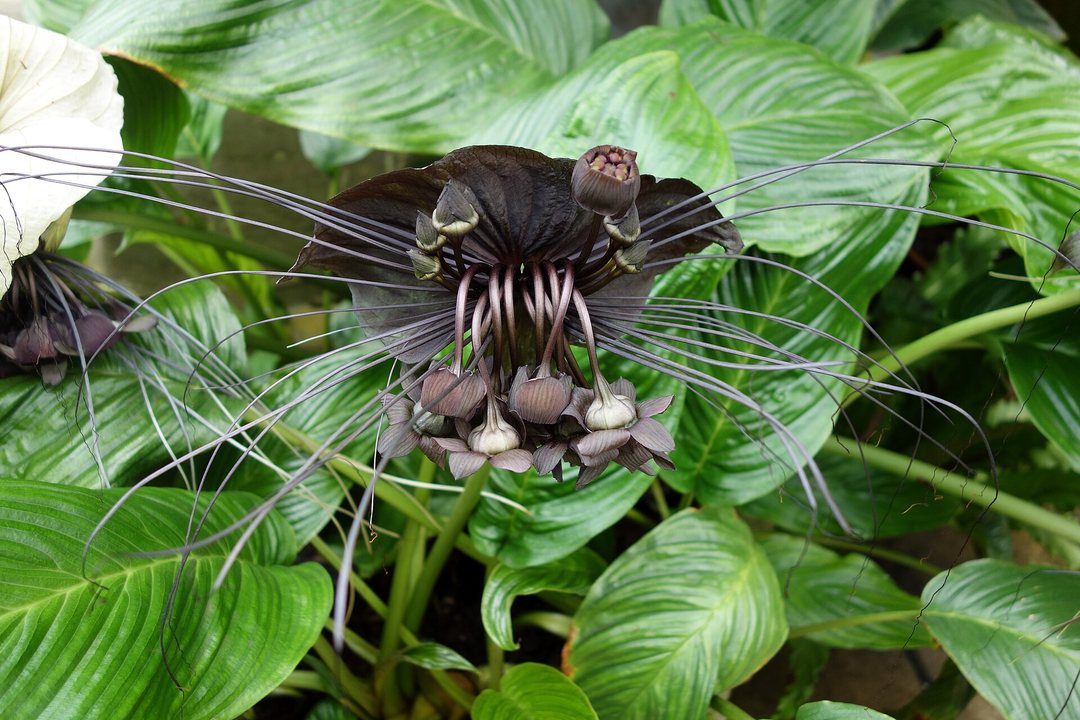
Photo: Daderot, CC0, via Wikimedia Commons
What is a black bat flower? The anatomy of a small bat
What looks like one flower is really a cluster. Here is how the costume is put together:
- The wings: two large bracts (modified leaves), dark purple to brownish black, spread out sideways above the flowers.
- The face: a bunch of small, nodding, purplish-black flowers in the middle, each with a helmet-like arrangement of stamens.
- The whiskers: long, thread-like bracteoles that hang down beneath the cluster, commonly 8 to 10 inches long. Some researchers think they may photosynthesize.
- The rest of the plant: broad, pleated, glossy green leaves on a clump that grows from rhizomes, usually 20 to 40 inches tall.
A full flower cluster can reach about 12 inches across. Other common names include devil flower and cat's whiskers, and the plant has picked up a long list of botanical synonyms over the years, including Tacca esquirolii and Tacca vespertilio (vespertilio is Latin for bat, so at least one botanist got the joke).
Where does the black bat flower grow in the wild?
Wild Tacca chantrieri grows in moist, shaded tropical forest across a wide band of Asia: Assam, Bangladesh, Myanmar, Thailand, Laos, Cambodia, Vietnam, Malaysia and southern China, including Hainan. It has the widest natural range of any species in its genus, which holds about ten species in all. That range has been shrinking. Habitat destruction, forest fragmentation and over-collection have all reduced wild populations, so the plant is common in cultivation but less so in its own woods.
It is a forest-floor plant, which explains most of its habits. It likes shade, rich damp soil and air so humid that a cabinet-keeper's spectacles fog up on entry.
Who pollinates the bat flower? A costume with no audience
The dark color, the drooping posture and the trap-like structure all suggest a flower built to fool flies, the way many carrion-mimic flowers do. Flies do visit, and the helmet-shaped stamens can trap them inside for a while. The twist is that field studies of the species found insect visits were infrequent and that most seed came from autonomous self-pollination, which happens before the flower even opens.
Some researchers have suggested that the plant once had a stronger smell and a pollinator that has since disappeared. Nobody knows for sure. For now it is a plant dressed for an elaborate performance that mostly ends up attending alone, which feels about right for this cabinet.
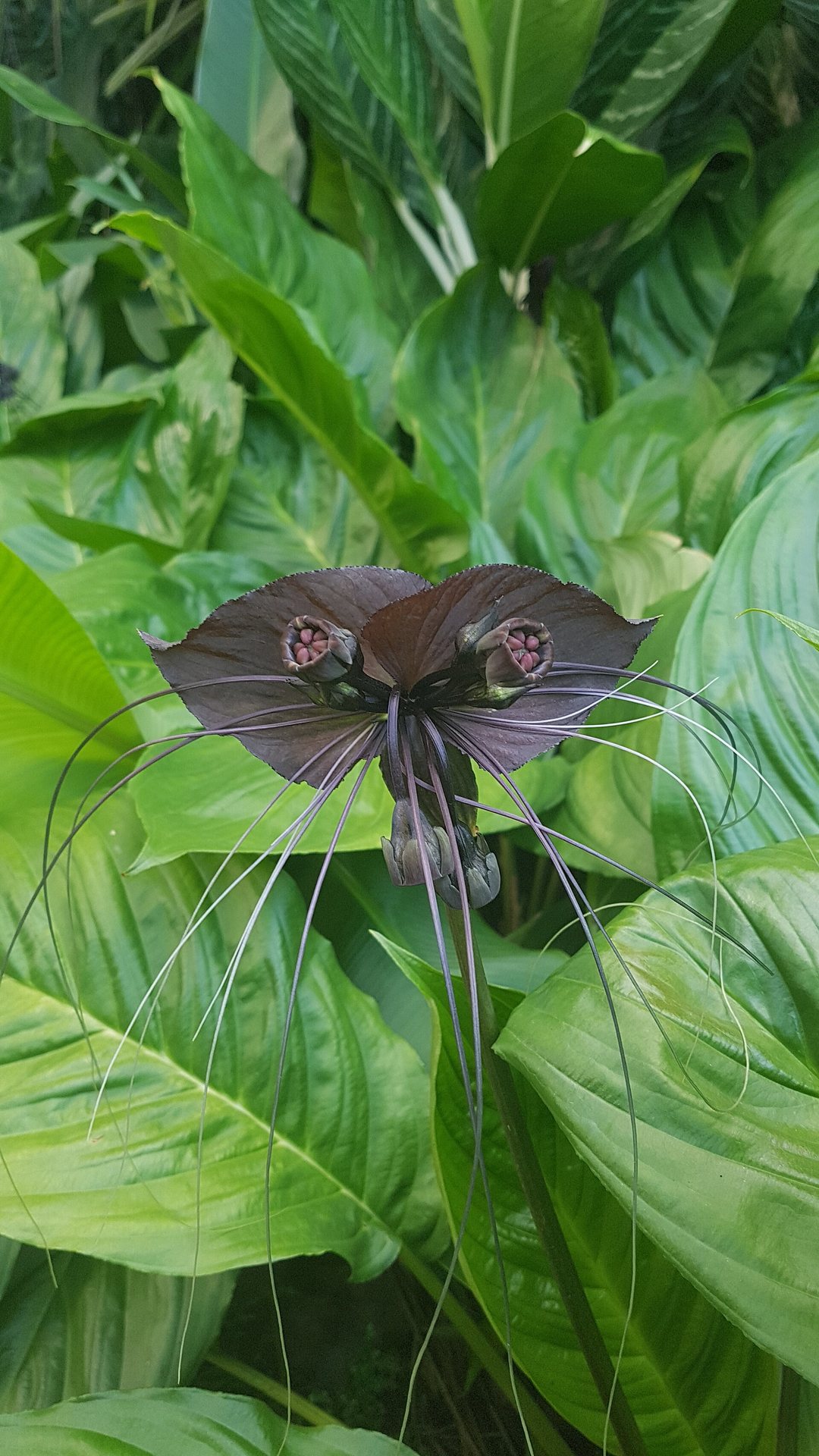
Photo: Cameroncomix, CC BY-SA 4.0, via Wikimedia Commons
How to care for a black bat flower
The University of Florida's extension service sums up the plant neatly: treat it much like an orchid. In practice that means:
- Light: low to moderate. Indoors, bright light but no direct sun. Outdoors, shade.
- Soil: very rich and well drained. UF suggests a mix of roughly 50 percent pine bark, 40 percent peat moss and 10 percent sand, in a wide, shallow pot.
- Water: keep the soil evenly moist, never soggy and never bone dry. A saucer under the pot helps.
- Humidity: high. Indoors, mist regularly or group it with other plants, and keep some air moving.
- Warmth: it is a tropical plant with no frost tolerance. In the US it can live outdoors only in frost-free places such as South Florida; everywhere else it is a houseplant or a greenhouse plant.
- Pests: slugs and snails like the soft leaves.
New plants come from dividing the rhizomes, or sometimes from seed. The UF/IFAS Gardening Solutions page on bat flower is a good, plain reference if you want the details in one place.
How long does it take a bat flower to bloom?
A plant generally needs to have produced at least two leaves before it flowers. Once it starts, a healthy plant can bloom up to eight times in a season. In Florida that season usually runs from late summer into fall; other sources describe flowering from spring into midsummer, depending on climate and growing conditions.
Can you cut black bat flowers for a vase?
You can, but you will regret it. The flowers decline quickly once cut, so growers leave them on the plant to fade naturally. This is a flower for looking at in situ, like a bat in a cave.
The white bat flower: Tacca integrifolia
The black bat flower has a paler cousin. The white bat flower, Tacca integrifolia, swaps the dark wings for a pair of broad white bracts that stand upright above the flowers, finely veined in mauve. Under them hang nodding, purplish-black flowers and long thread-like filaments, so it looks like a bat that has been dipped in milk from the shoulders up.
- Bracts: black bat flower, dark and spread sideways like wings; white bat flower, white with mauve veins and held upright.
- Native range: the white bat flower grows in hill rainforest across South Asia (including India and Bangladesh), Indochina, the Malay Peninsula, Sumatra, Java and eastern China.
- In cultivation: the black bat flower is the one you are most likely to find; the white species is a more recent arrival in gardens and has a reputation for being a little fussier indoors.
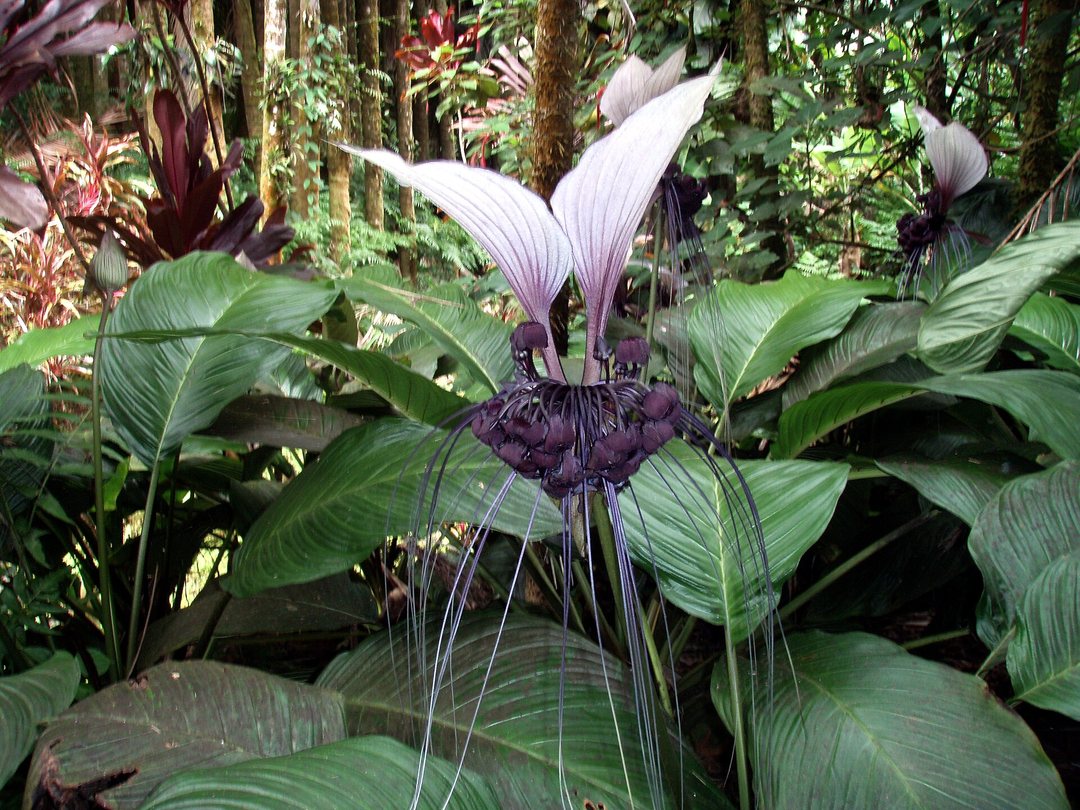
Photo: Brocken Inaglory, CC BY-SA 3.0, via Wikimedia Commons
Is the black bat flower toxic?
The honest answer is that it is poorly documented. Some horticultural sources say the plant contains calcium oxalate crystals that can irritate the mouth and stomach of pets, but reliable veterinary data are thin. The sensible course is the usual one: it is not food, keep it away from cats, dogs and small children who taste things, and wash your hands after handling the rhizomes.
The rhizomes do have a history in traditional Chinese medicine, and compounds from the roots called taccalonolides have been studied in laboratories for their effect on cell division. That is lab research, not a home remedy, and nobody should try to brew anything from a houseplant.
Is the black bat flower rare?
Not in cultivation. It turns up at specialist nurseries and in the tropical houses of many botanic gardens, which is where most people first meet it. In the wild, its numbers have fallen as its forests have been cleared.
A curator's last word
The black bat flower sits on the cabinet's darkest shelf, next to other things that look sinister and turn out to be shy. It mimics a flower that wants flies, then mostly pollinates itself before the doors open. If you like that sort of contradiction, the skeleton flower that turns transparent in the rain is two shelves over, and the whole wing of strange blooms is open until dusk. After dusk, see the flowers that bloom at night.