
Lotus vs Water Lily: Two Pond Flowers That Are Not Related at All
Lotus vs water lily: lotus holds round leaves and flowers high above the water, water lily floats notched pads on it. Leaves, seed pods, care and meaning.
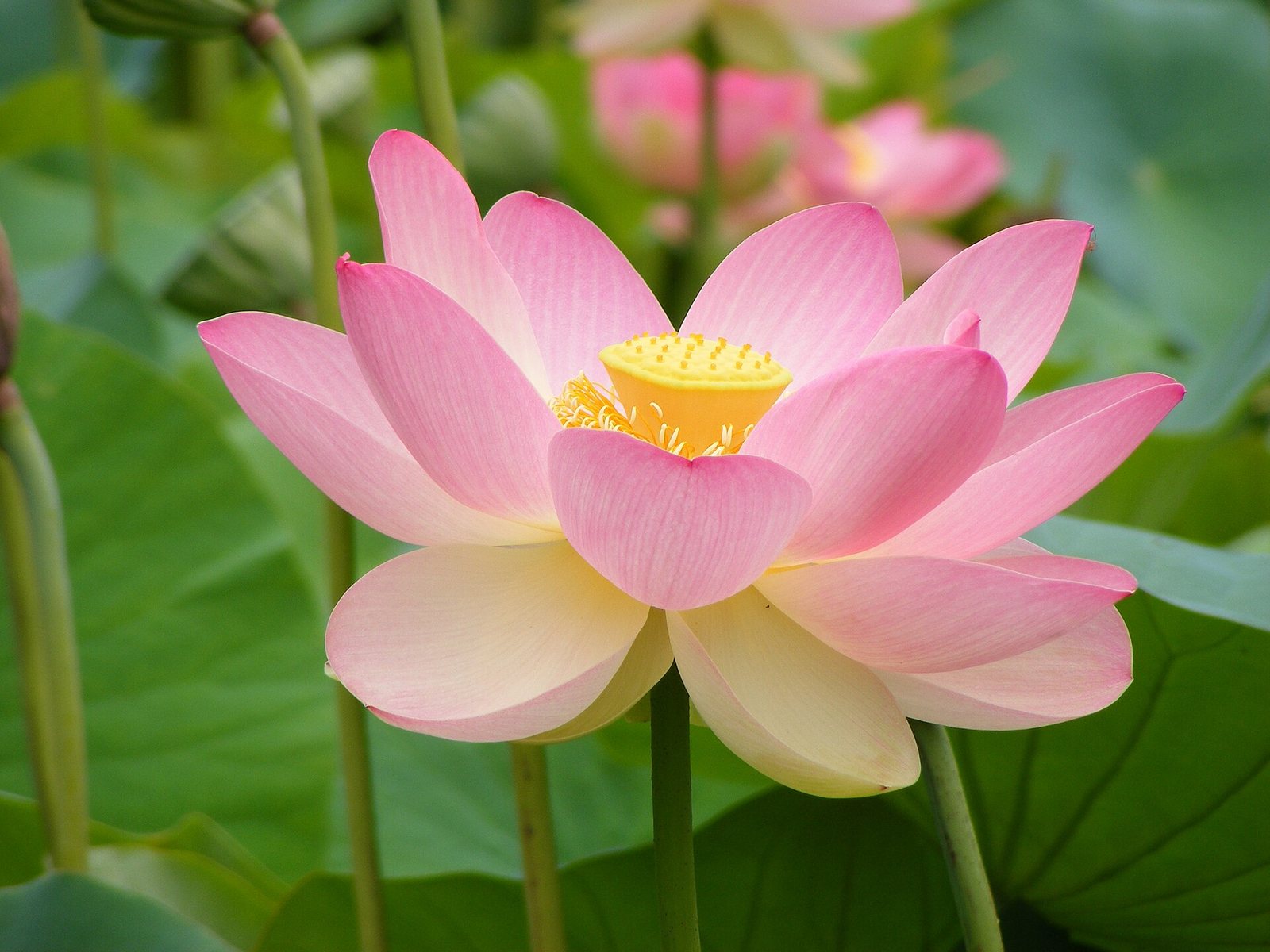
The quickest way to tell a lotus from a water lily: a lotus (Nelumbo) lifts its round, un-notched leaves and its flowers well above the water on stiff stalks, while a water lily (Nymphaea) floats flat pads with a V-shaped notch on the surface and blooms at or just above the water line. Lotus also leaves behind a seed pod that looks like a showerhead. Despite the look-alike ponds, the two are not close relatives.
Exhibit one in the wet room of the cabinet is a jar of murky pond water with two labels on it, and both labels are correct. People have mixed these plants up for at least three thousand years, including the ancient Egyptians, whose sacred "lotus" was in fact a water lily. The confusion is forgivable. The plants share a habitat, a silhouette and a reputation for serenity. Botanically, though, they sit on opposite ends of the flowering plant family tree, and once you know where to look, you will never mix them up again.
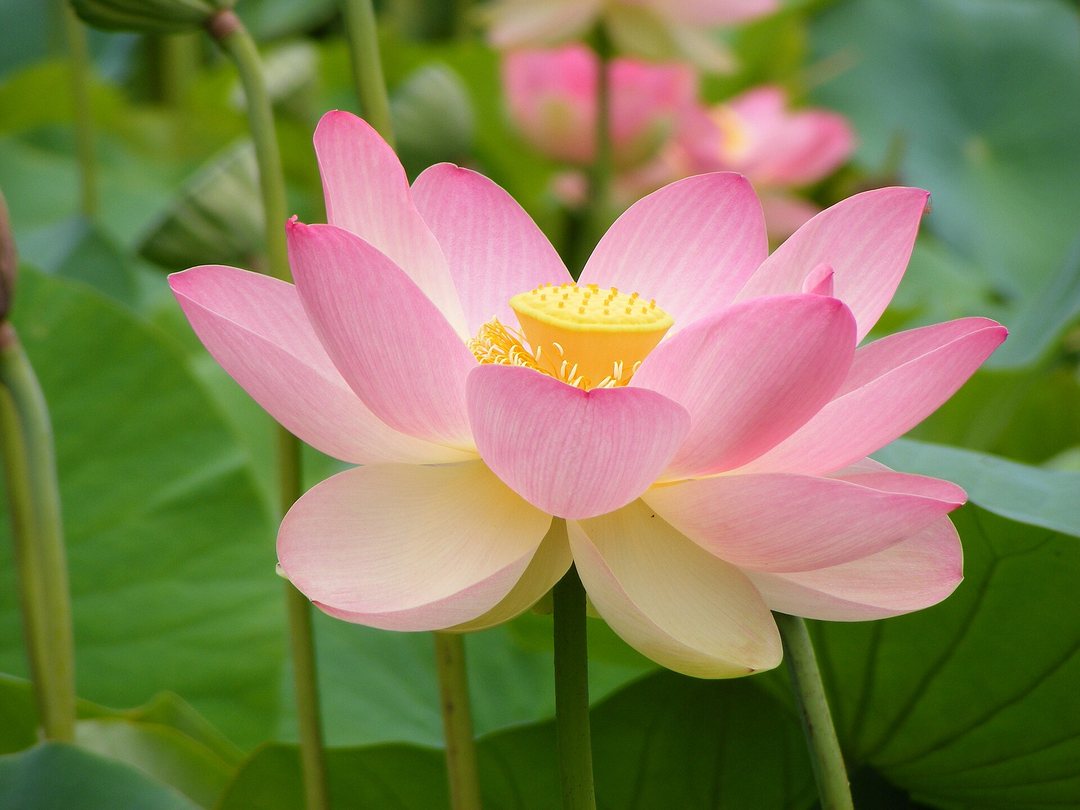
Photo: Peripitus, CC BY-SA 4.0, via Wikimedia Commons
Lotus vs water lily at a glance
- Botany: lotus is Nelumbo, family Nelumbonaceae, whose closest living relatives are plane trees and proteas; water lily is Nymphaea, family Nymphaeaceae, one of the oldest lineages of flowering plants.
- Leaves: lotus leaves are round, with no slit, attached to the stalk at the center, and usually held above the water; water lily pads float flat and have a notch cut to the center.
- Flowers: lotus flowers rise on stalks well above the leaves; water lily flowers float on the surface or sit a few inches above it.
- Center of the flower: lotus has a flat-topped, yellow seed head in the middle from the start; water lily has a ring of many stamens around a cup-like center.
- Seed pod: lotus forms a dry "showerhead" pod above the water; in water lilies the fruit usually ripens out of sight, under the surface.
- Water depth: lotus prefers shallow water, from a few inches to about a foot over the roots; water lilies cope with deeper water, often 1 to 3 feet for garden types.
- Scent: both can be fragrant; lotus is sweet and slightly fruity, and many water lilies, such as the native fragrant water lily (Nymphaea odorata), are strongly perfumed.
- Climate: lotus needs a long, hot summer to flower well; hardy water lilies bloom in cooler summers, and tropical water lilies need real heat.
- Kitchen: lotus root and lotus seeds are everyday foods in much of Asia; water lilies are not a standard food crop.
Leaves: the easiest way to tell lotus from water lily
If there is no flower in sight, look at the leaves. A water lily pad is a flat disc with a slit running from the edge to the center, so it looks like a pie with one slice removed. It lies on the water like a dropped plate. A lotus leaf has no slit at all. The stalk meets it underneath, in the middle, like the handle of an umbrella, and most mature leaves stand above the surface, sometimes on stalks taller than a person. Leaves of the sacred lotus can reach two feet or more across.
Pour water on a lotus leaf and it beads up and rolls off, collecting dust as it goes. The surface is covered in microscopic bumps topped with wax, which keeps it clean and dry. Engineers call this the "lotus effect" and have copied it for self-cleaning paints and fabrics. A water lily pad is waxy too, and it sheds water, but it does not perform the same party trick.
Is a lotus a type of water lily?
No. For a long time botanists filed Nelumbo with the water lilies because of the shared lifestyle. DNA studies moved it to its own family, Nelumbonaceae, in the order Proteales, which puts its nearest relatives among plane trees and the proteas of South Africa and Australia. The resemblance to water lilies is convergent: two unrelated plants solving the same pond problem in similar ways.
Flowers and seed pods: what to look for in bloom
A lotus flower sits on a stalk well clear of the water, often above the leaves themselves. In the center is a flat, yellow, cone-shaped receptacle dotted with little holes, each holding a developing seed. Each flower usually opens for about three days, opening in the morning and partly closing in the afternoon. The sacred lotus is also one of the few plants that warms its own flowers: during those days the blossom holds its temperature at roughly human body warmth, even on cooler nights, which is thought to reward the beetles and bees that visit.
A water lily flower floats on the pad layer or stands just a few inches above it. Its center is a crowd of golden stamens rather than a single disc. After pollination, the stalk of many water lilies bends or coils and pulls the developing fruit down under the water, where the seeds ripen in privacy.
The lotus has no such modesty. Its seed head swells into the pod that dried-flower shops and craft rooms love: a flat-faced, many-holed cone that turns brown and nods toward the water as it dries. Lotus seeds are famously long-lived. A seed recovered from a dry lakebed in northeastern China, radiocarbon dated to about 1,300 years old, has germinated.
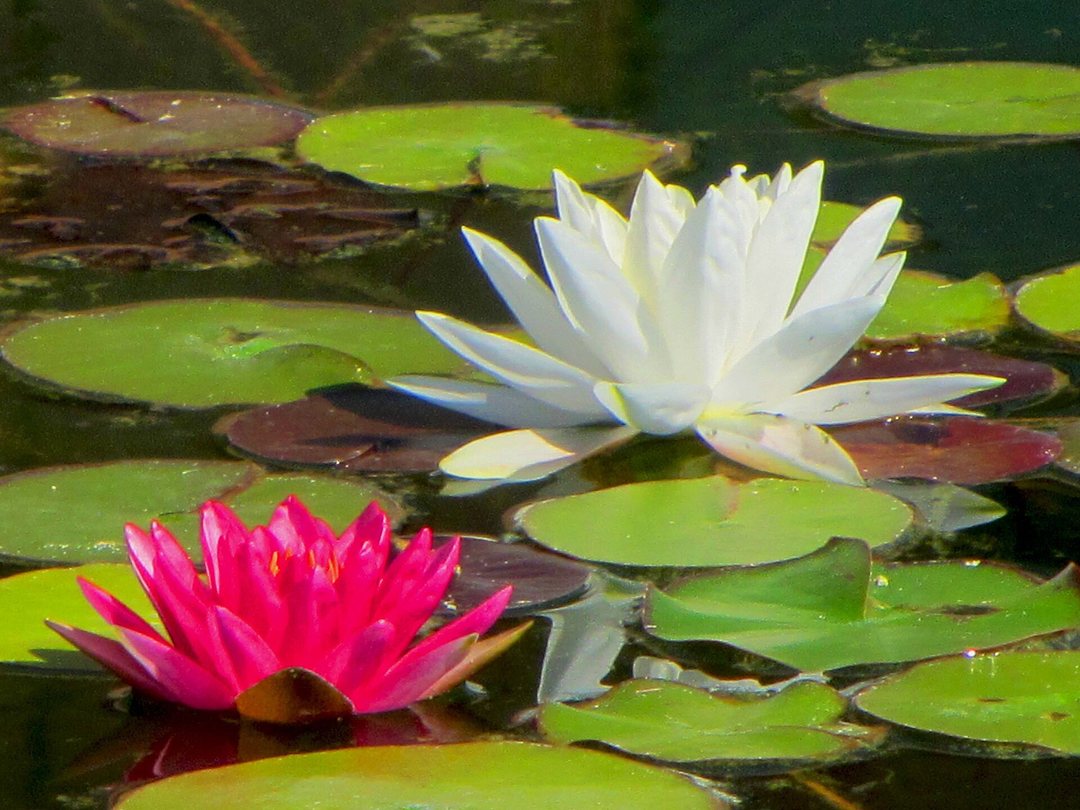
Photo: Делфина, CC0, via Wikimedia Commons
Growing lotus and water lilies: depth, sun and climate
Both plants grow from rhizomes rooted in mud, and both want full sun, at least six hours a day, to flower properly. After that, their needs split.
- Lotus likes shallow water, warm summers and a wide container, since the rhizomes run. It needs several weeks of hot weather before it flowers, so in cool-summer regions it may grow leaves and not much else. In winter the rhizome must not freeze solid. In Florida, the University of Florida IFAS flags sacred lotus as a non-native plant with invasive potential, so keep it contained there.
- Hardy water lilies survive cold winters as long as the crown sits below the ice. They flower in a wider range of climates and tolerate deeper water than lotus.
- Tropical water lilies need warm water, and in most of the US are treated as annuals or overwintered indoors. Some open only at night, which is why they appear in our list of flowers that bloom at night.
Do lotus and water lily grow in the same pond?
They can, but lotus is the more aggressive neighbor. Its leaves rise and shade everything below, so most gardeners grow it in its own pot or its own corner, in shallower water than the lilies.
The United States has a native of each: the American lotus (Nelumbo lutea), with pale yellow flowers, and the fragrant white water lily (Nymphaea odorata). The Missouri Botanical Garden's sacred lotus collection is a good place to see the tall habit in person.
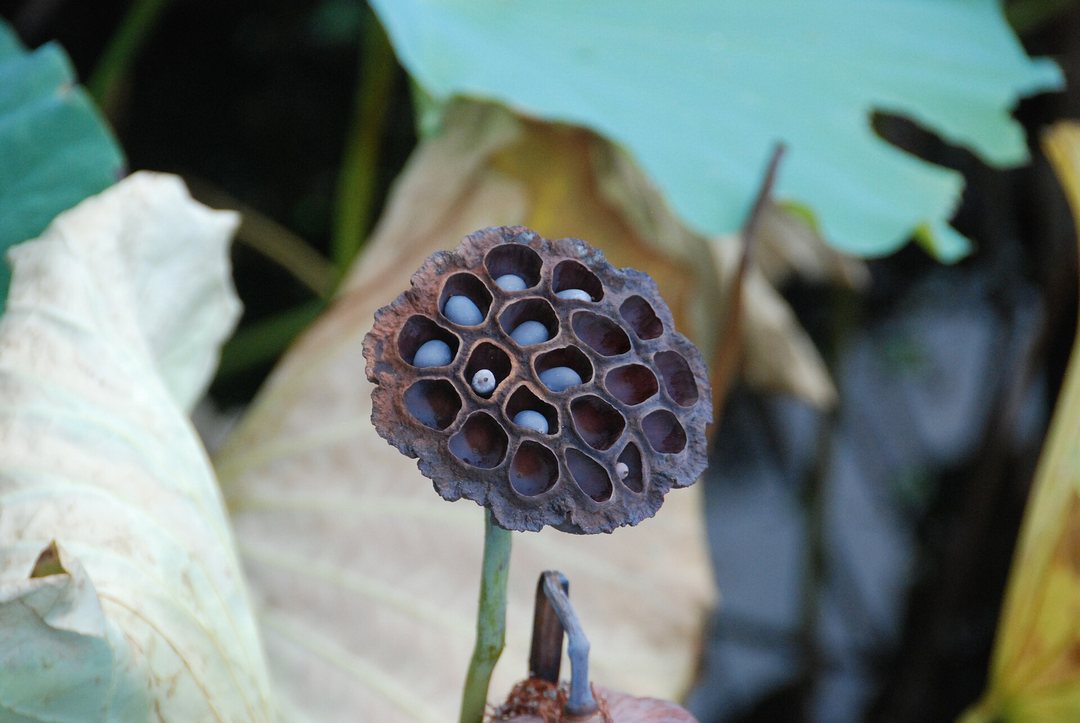
Photo: Maarten Heerlien from Voorschoten, The Netherlands, CC BY 2.0, via Wikimedia Commons
Lotus and water lily meaning, from Egypt to Giverny
The lotus is the national flower of India and a central symbol in Hinduism and Buddhism: a clean, perfect bloom that rises from mud, standing for purity and enlightenment. Deities and the Buddha are shown seated or standing on lotus flowers.
The water lily has its own long record. The "blue lotus" and "white lotus" of ancient Egyptian art are water lilies, Nymphaea caerulea and Nymphaea lotus. The true lotus seems to have reached Egypt much later. A water lily, Nymphaea nouchali, is the national flower of Bangladesh. And Claude Monet's famous paintings of his pond at Giverny show water lilies, not lotus, which you can confirm from the flat, notched pads. For more on what flowers have been made to mean, see the floriography shelf.
Can you eat lotus or water lily?
Lotus is a food plant: the crunchy, hole-patterned rhizome (lotus root), the seeds and the young leaves are all eaten in Asian cooking, cooked rather than raw. Water lilies are a different story. Blue water lily contains alkaloids with sedative effects and is not something to experiment with. Never eat any plant from a pond of unknown water quality.
Lotus or water lily: which one should you choose
Choose lotus if you have hot summers, a shallow pond or a large tub, and you want drama: leaves at eye level, flowers on tall stems and seed pods for drying. Choose water lilies if your summers are mild, your pond is deeper, or you want flowers lying on the surface where they reflect the sky. Hardy water lilies are the easier first plant for most of the country.
The curator's last word: stand at the edge of the pond and look at the height of things. If the flowers are trying to get away from the water, it is a lotus. If they are lying on it as if on a cool sheet, it is a water lily. More pairs that people swap by mistake live in the versus drawer.