
Azalea vs Rhododendron: Every Azalea Is a Rhododendron, Not the Other Way Around
Azalea vs rhododendron: all azaleas belong to the genus Rhododendron. How to tell them apart by stamens, leaves and flowers, plus care and toxicity.
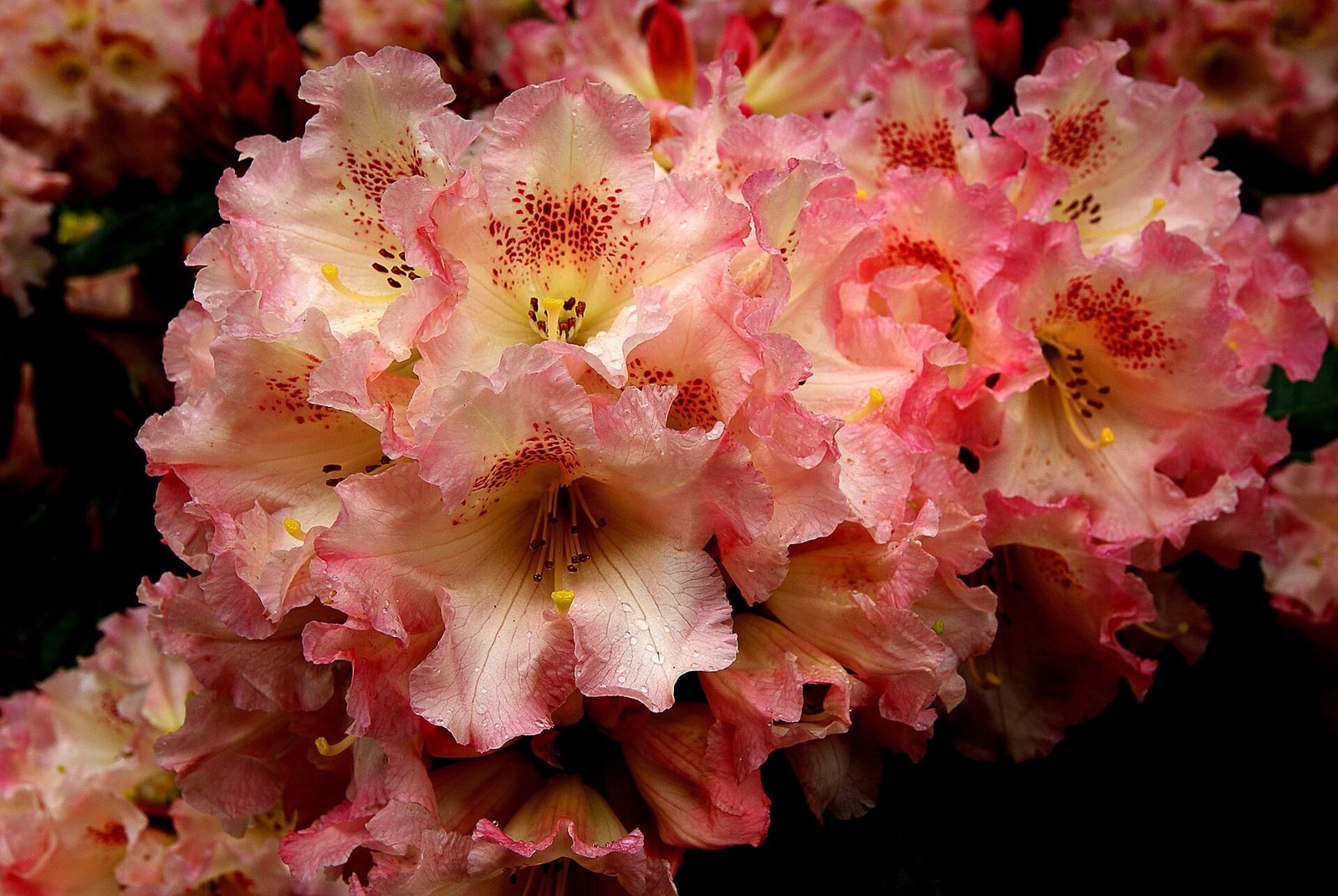
Every azalea is a rhododendron, but not every rhododendron is an azalea: both belong to the genus Rhododendron, and "azalea" is the name for one group within it. In the garden, azaleas usually have five stamens per flower, funnel-shaped blooms and smaller, thinner leaves (often deciduous), while the shrubs people call rhododendrons usually have ten or more stamens, bell-shaped flowers in big clusters and large, leathery evergreen leaves.
The cabinet keeps a pressed leaf from each, mounted side by side under glass, and visitors still argue over them. This is a family quarrel rather than a feud between strangers. The genus holds around a thousand species, from creeping alpine mats to Himalayan trees, and it belongs to the heath family, Ericaceae, along with blueberries and heather. The line between azalea and rhododendron is a gardener's line, drawn with a soft pencil, and there are plants that sit right on top of it.
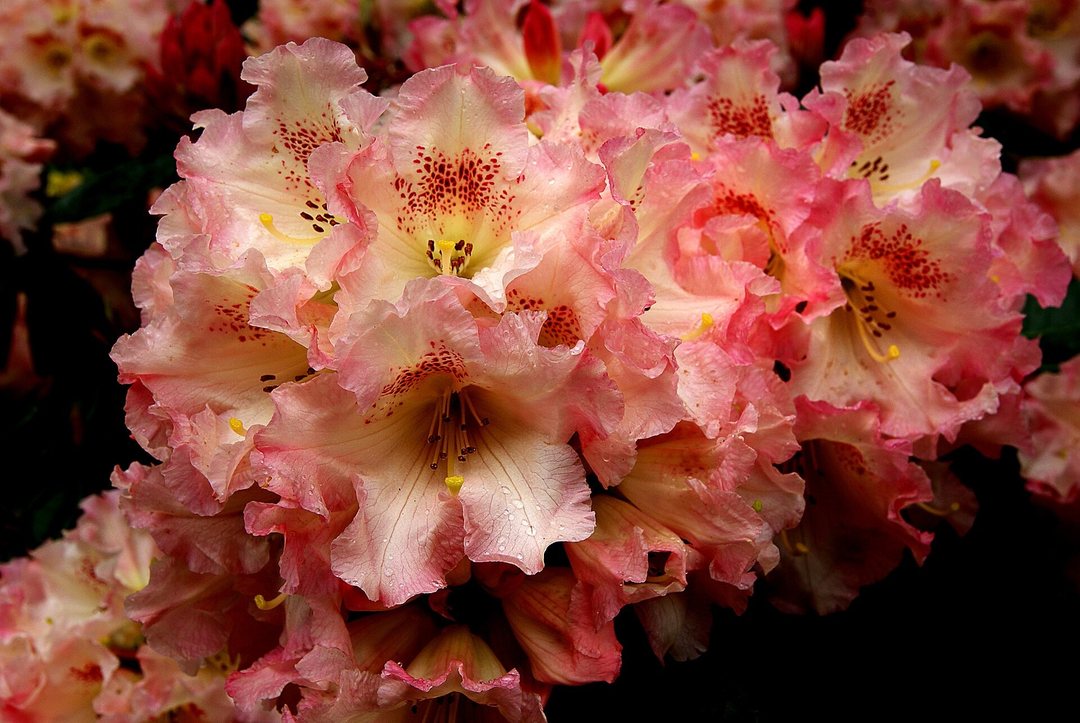
Photo: Bernard Spragg. NZ from Christchurch, New Zealand, CC0, via Wikimedia Commons
Azalea vs rhododendron side by side
- Botany: both are Rhododendron; azaleas are a subgroup within the genus.
- Stamens: azaleas usually have 5 (sometimes up to 10); rhododendrons usually have 10 or more.
- Flowers: azaleas are funnel-shaped and often borne one to a few per stem tip; rhododendrons are bell-shaped and gathered into large rounded clusters called trusses.
- Leaves: azalea leaves are small, thin and often hairy, and many azaleas drop them in fall; rhododendron leaves are large, thick, leathery and mostly evergreen.
- Leaf undersides: azaleas never have tiny rust-colored scales; many rhododendrons (the "lepidote" types) do.
- Size: most garden azaleas stay 2 to 6 feet; many rhododendrons grow 6 to 12 feet or more.
- Bloom time: most azaleas flower in early to mid spring; most big-leaved rhododendrons follow in mid to late spring.
- Scent: many native deciduous azaleas are fragrant; most popular hybrid rhododendrons have little or no scent.
- Toxicity: the same for both: all parts are poisonous.
How to tell an azalea from a rhododendron: stamens, leaves and scales
The most reliable home test is to count. Pick a single flower, look inside, and count the long, thread-like stamens with pollen sacs on the ends. Five suggests an azalea, matching the five lobes of the flower. Ten or more suggests a rhododendron. It is not a perfect rule (a few species break it), but it works on most shrubs you will meet in a yard or garden center.
Out of flower, turn a leaf over. If you see tiny dots or scales on the underside, sometimes rusty and visible with a hand lens, you have a lepidote rhododendron. Azaleas never carry these scales, though their leaves are often hairy, especially along the midrib. A big, stiff, dark leaf as long as your hand that stays on all winter almost certainly belongs to a rhododendron.
Are azaleas and rhododendrons the same plant?
Same genus, different groups. Linnaeus actually put them in two separate genera in 1753, naming Azalea from a Greek word for "dry" because he thought they liked dry ground, which they do not. Later botanists folded the azaleas into Rhododendron ("rose tree"), but the old name survived in gardens, and it is still useful for describing the plants.
Are deciduous azaleas real azaleas?
Yes. Azaleas come in two broad types. Evergreen azaleas, such as the Kurume and Southern Indica azaleas planted across the South, keep small leaves year round. Deciduous azaleas, which include most of the North American natives, lose their leaves in fall and often have the brightest colors and the best scent.
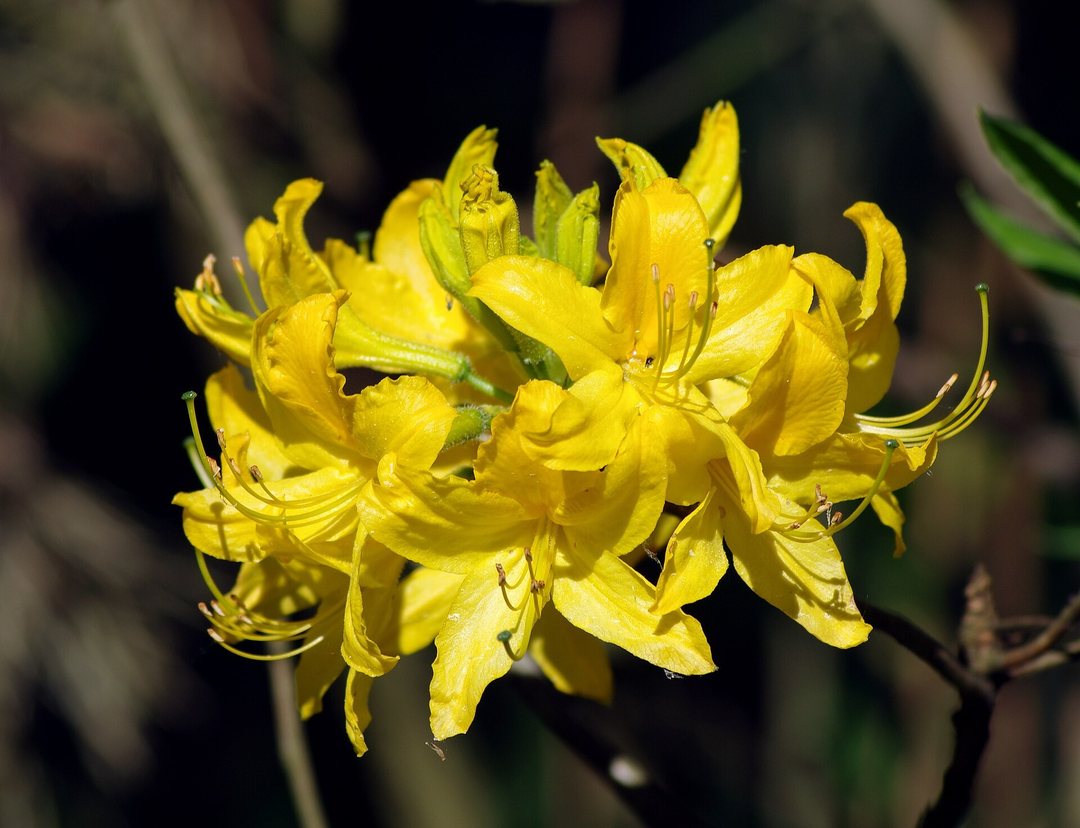
Photo: Chrumps, CC BY 3.0, via Wikimedia Commons
American natives: flame azalea, rosebay and friends
The United States has a remarkable set of wild species. In the Appalachians, the flame azalea (Rhododendron calendulaceum) lights up open woods in shades of orange and red, and the pinxterbloom azalea (R. periclymenoides) brings pale pink. The Florida azalea (R. austrinum) is a fragrant yellow-orange native of the Gulf Coast, and the plumleaf azalea (R. prunifolium) blooms unusually late, in summer.
On the rhododendron side, rosebay (R. maximum) forms dense thickets along mountain streams and is the state flower of West Virginia. Catawba rhododendron (R. catawbiense) is a parent of many tough garden hybrids, and the Pacific rhododendron (R. macrophyllum) is the state flower of Washington. Most of these natives are visited by bumblebees, and you can read why bees love certain colors in our page on blue flowers for bees.
Azalea and rhododendron care: soil, sun and cold hardiness
Their care is nearly identical, because their roots are the same kind: fine, shallow and fussy.
- Soil: acidic (roughly pH 4.5 to 6), moist, rich in organic matter and well drained. Heavy, wet clay invites root rot, a common killer of both.
- Planting: set the top of the root ball level with or slightly above the soil, never deeper, and mulch with pine needles or bark. Do not dig around the roots.
- Light: morning sun and afternoon shade suit most. Big-leaved rhododendrons want more shade and cooler summers; many azaleas, especially deciduous ones, take more sun.
- Pruning: right after flowering, since next year's buds form during summer.
- Cold: it depends on the plant, not the label. Some Catawba hybrid rhododendrons and the Northern Lights azaleas bred at the University of Minnesota survive very cold winters, while Southern Indica azaleas are suited to the warm South.
Oregon State University's landscape plants guide has a clear summary of how the groups are separated, including the exceptions.
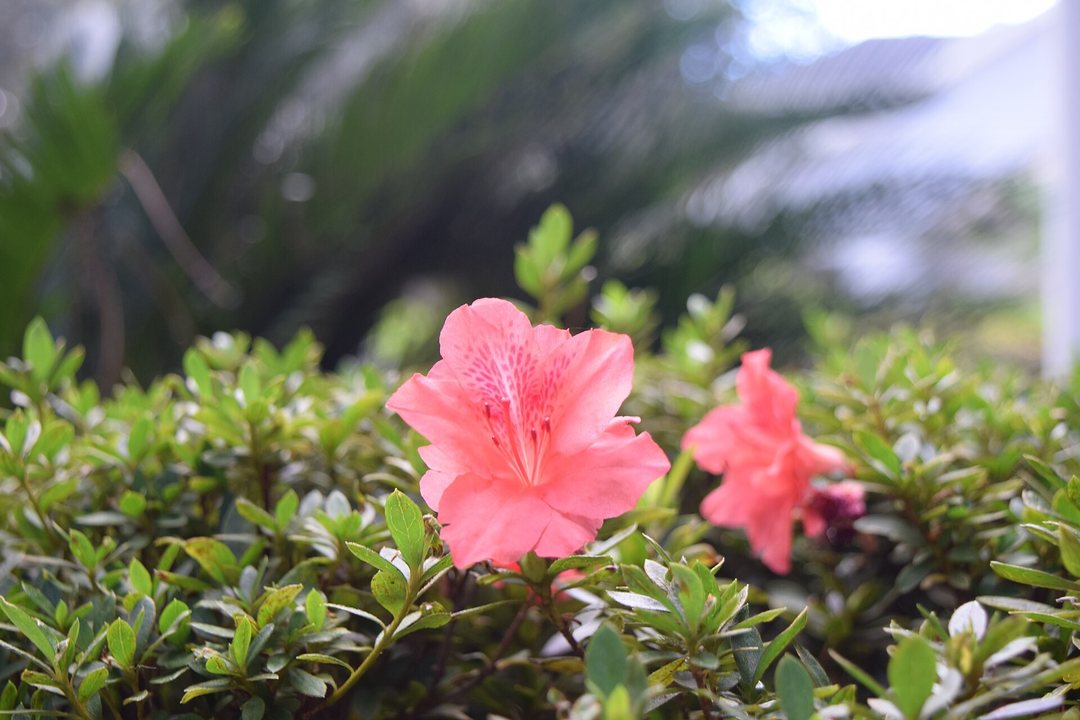
Photo: P,TO 19104, CC0, via Wikimedia Commons
Are azaleas and rhododendrons poisonous?
Yes, both. Leaves, flowers and nectar contain grayanotoxins, which affect the heart and nervous system. The ASPCA lists azaleas and rhododendrons as toxic to dogs, cats and horses, and they are a known danger to goats and sheep. Signs include drooling, vomiting, weakness and an abnormal heart rhythm, so call a vet or poison line quickly if an animal has been chewing them.
The toxin even reaches honey. Bees working certain rhododendrons around the Black Sea produce "mad honey," which can cause dizziness, low blood pressure and a slow heartbeat. The Greek writer Xenophon described soldiers falling ill after eating local honey in that region in the fourth century BC.
What do azaleas and rhododendrons symbolize?
In Victorian flower dictionaries, azalea was often given as temperance or "take care of yourself for me," while rhododendron stood for danger or "beware." Given the honey, the rhododendron's reputation seems earned. More meanings live on the floriography shelf.
Azalea or rhododendron: which one should you choose
Pick an azalea for a smaller space, a low hedge, more sun or a cloud of color in early spring; pick a native deciduous azalea if you want scent and pollinators. Pick a rhododendron for a shady corner, a large evergreen screen and big, bold trusses later in spring. Both want the same acidic, well-drained, shallow-rooted life, and they look good planted together, which extends the flowering season by several weeks.
The curator's last word: when in doubt, count to five. If the flower stops there, call it an azalea. If it keeps going, call it a rhododendron, and know that it is a rhododendron either way. Other pairs that share a drawer are filed under versus.