
Ranunculus vs Peony: The Paper Rosette and the Silk Cushion
Ranunculus vs peony: peonies are big, late-spring blooms; ranunculus are smaller, layered and in season longer. Looks, vase life, weddings and care.
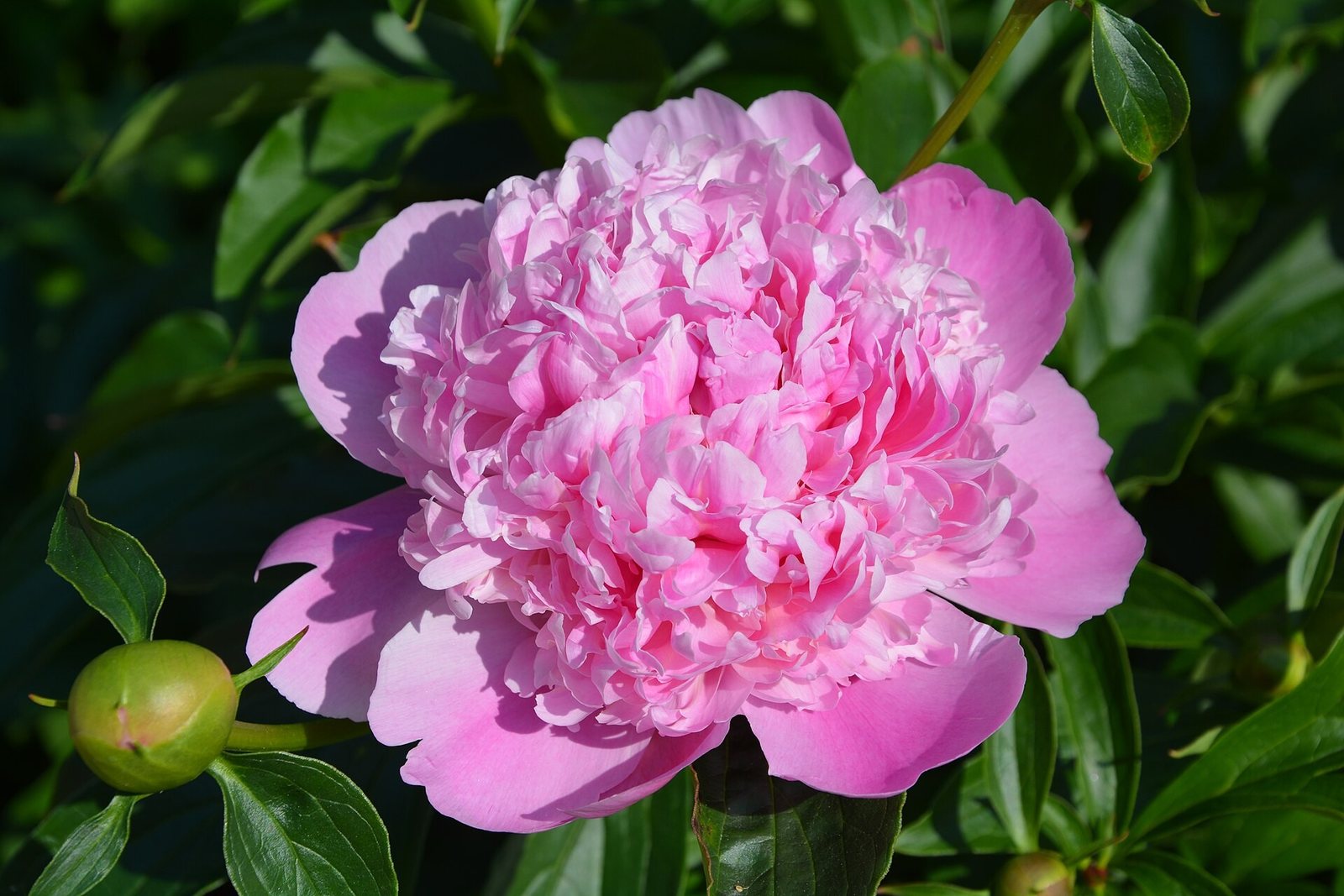
Peonies are large, often fragrant flowers from long-lived perennials, with a short season in late spring and early summer; ranunculus are smaller, tightly layered, mostly scentless flowers from a cool-season bulb-like plant, available over a longer stretch from late winter through spring. In a bouquet, a peony is the big soft focal point, and ranunculus are the neat, many-petaled supporting cast that holds its shape longer in the vase.
The cabinet keeps one of each, pressed in the same heavy book, and they came out looking like different species of pastry. The ranunculus is a stack of paper-thin layers, like a rosette cut from tissue. The peony is a crumpled silk cushion that has clearly been sat on. Brides, florists and gardeners compare them constantly, because at a glance (and especially in photographs) a double ranunculus can pass for a small peony or even a rose.
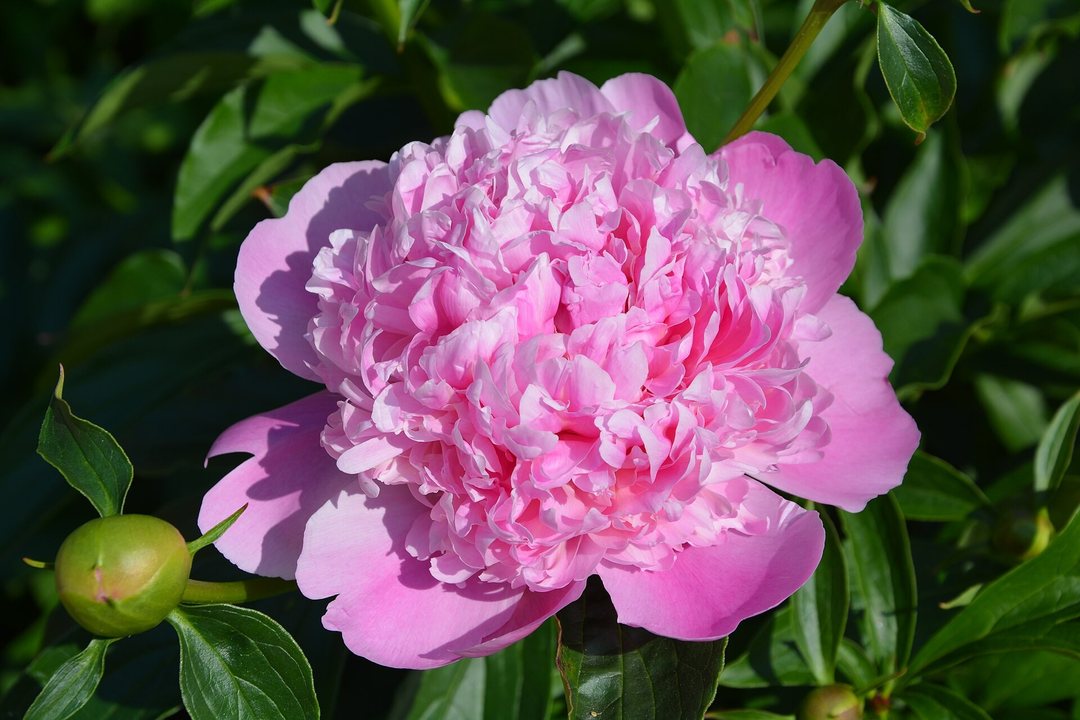
Photo: Nucatum amygdalarum, CC BY-SA 4.0, via Wikimedia Commons
Ranunculus vs peony side by side
- Botany: peony is Paeonia, the only genus in its own family, Paeoniaceae; the florist's ranunculus is Ranunculus asiaticus, the Persian buttercup, in the buttercup family, Ranunculaceae.
- Flower size: peonies are usually 4 to 8 inches across; ranunculus are usually 2 to 3 inches, with some large cultivars bigger.
- Petals: peony petals are broad, soft and ruffled; ranunculus petals are thin, many and arranged in tight, even spirals.
- Stems and leaves: peony stems are thick and leafy with large, deeply lobed glossy leaves; ranunculus stems are thinner and hollow, with finely divided, almost parsley-like leaves.
- Scent: many peonies are strongly fragrant; ranunculus have little or no scent.
- Season: peonies peak in late spring to early summer; ranunculus run from late winter through spring.
- Vase life: peonies usually last about 5 to 7 days; ranunculus often last a week or more and keep opening.
- Growth: peonies are perennials that can live for decades; ranunculus grow from claw-like tuberous roots and are often treated as annuals.
- Toxicity: both are listed by the ASPCA as toxic to dogs, cats and horses.
How to tell ranunculus from peonies at a glance
Size is the first clue: a peony fills a cupped hand, a ranunculus sits in your palm. Then look at the petals. Ranunculus petals are finer and more regular, packed in concentric layers so neat that they look machine-made, and many varieties show a dark or green button at the center. Peony petals are fewer, broader and more crumpled, and the open flower often shows a mass of golden stamens or a loose pompom of narrow inner petals.
The stem gives it away in the hand. A ranunculus stem is slim and hollow, and it bends easily if handled roughly. A peony stem is solid and sturdy, carrying big lobed leaves.
What flower looks like a peony but smaller?
Ranunculus is the most common answer. Double garden roses, especially old-fashioned cup-shaped types, and peony-flowered tulips are the other usual stand-ins. If you like the layered look, our guide to making crepe paper flowers shows how close paper can get to a ranunculus.
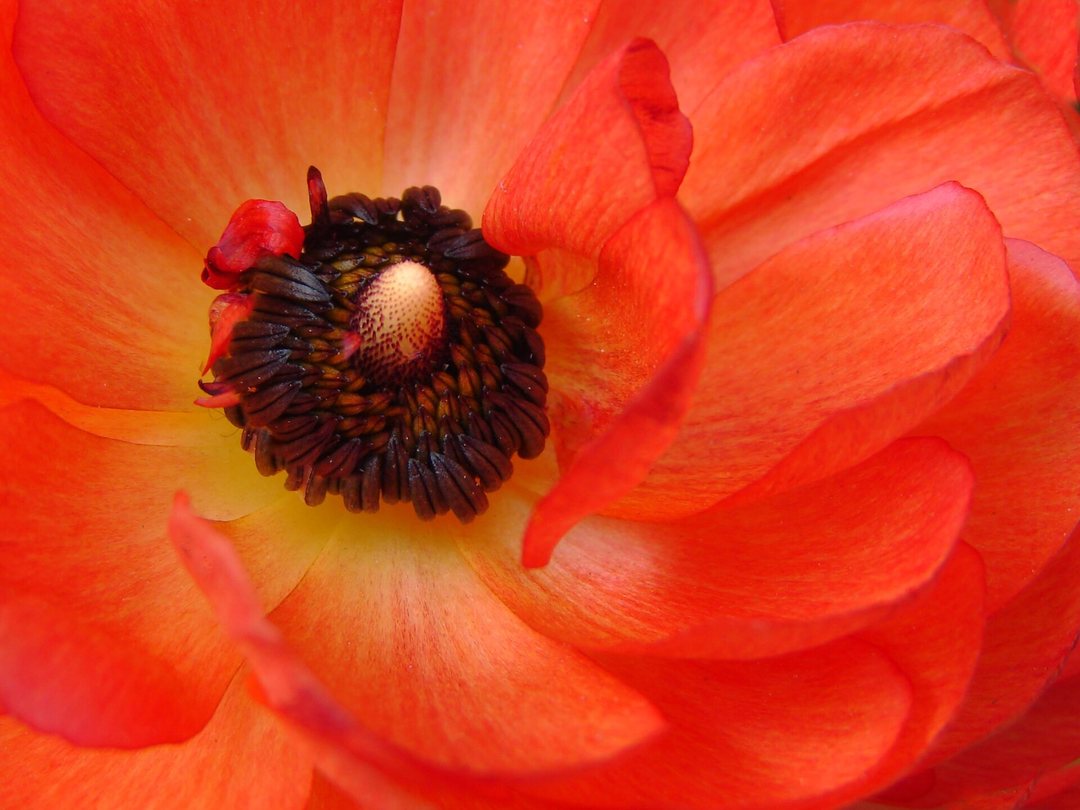
Photo: Nevit Dilmen, CC BY-SA 3.0, via Wikimedia Commons
Ranunculus vs peonies for a wedding bouquet
For weddings, the choice usually comes down to date, scale and budget, rather than looks alone.
- Wedding date: peonies from US gardens and farms are mostly a late spring and early summer flower. Growers in Alaska, where peonies bloom later, supply them into midsummer, and southern hemisphere imports fill some autumn gaps. Ranunculus are easier to find from late winter into spring.
- Size and stem count: because peonies are so big, a few stems make an impact. A ranunculus bouquet needs many more stems for the same size.
- Cost: peonies are usually the more expensive stem, especially outside their peak weeks.
- Durability: peonies can blow open fast in heat and drop petals; ranunculus hold their shape well for a long day, though their stems are soft.
- Scent: if fragrance matters, peony wins easily.
Can you mix ranunculus and peonies?
Yes, and florists do it all the time. Peonies supply the large, soft focal blooms, and ranunculus fill gaps with tighter texture and extra color, since they come in a wider range of shades, including oranges, burgundies and bicolors. For a sense of how a mixed bouquet can say something specific, see why a custom flower bouquet says so much more.
Vase life: which lasts longer, ranunculus or peony
Ranunculus usually last longer in the vase, often a week or more, and buds cut with color showing will continue to open. Recut the stems, keep the water shallow and clean, and change it often, since hollow stems rot quickly.
Peonies usually give about five to seven days. They are cut at the "marshmallow" stage, when the bud is colored and soft when squeezed; a hard green bud may never open. Peonies open fast in a warm room and slowly in a cool one, which is why growers can hold buds in cold storage for some time before sale. The ants often seen on peony buds are feeding on sugary nectar outside the bud. They do not help the flower open, and they are harmless to it.
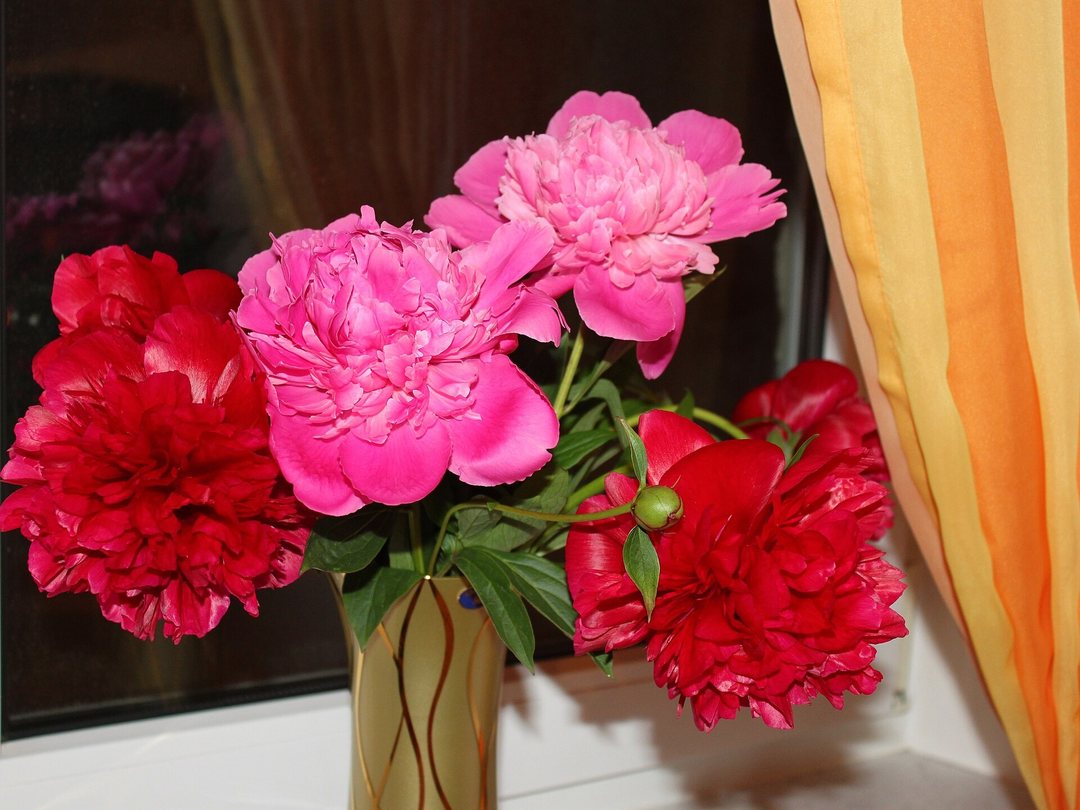
Photo: Liilia Moroz, CC BY-SA 4.0, via Wikimedia Commons
Growing ranunculus and peonies: claws, eyes and patience
Peonies are among the longest-lived garden perennials. Herbaceous peonies are generally hardy in USDA zones 3 to 8 and need a cold winter to flower. Plant the roots in fall with the pink buds ("eyes") no more than about 2 inches below the soil surface; planting too deep is a classic reason for a peony that never blooms. Expect a couple of years before a full show, after which a clump can flower for decades without being moved.
Ranunculus grow from dry, claw-shaped tuberous roots, planted claws down after a few hours of soaking. They like cool weather and full sun, and they stop flowering once summer heat arrives. North Carolina State Extension lists them as hardy in zones 8 to 10, where they are planted in fall; in colder areas they are planted in early spring or grown under cover. Both flowers are favorites with small cut-flower farms, as noted in our page on profitable cut flowers for small growers.
Are ranunculus and peonies poisonous?
Both are listed by the ASPCA as toxic to pets. Ranunculus sap contains a compound that breaks down into protoanemonin, an irritant that can blister the mouth and skin, so sensitive people may want gloves when handling a lot of stems. Peonies can cause vomiting and diarrhea in pets if eaten. Keep both away from animals that like to chew bouquets.
Meaning, and which one to choose
In China the peony has long been called the king of flowers, linked with wealth, honor and spring; it is also the traditional flower for a 12th wedding anniversary and has been the state flower of Indiana since 1957. Ranunculus takes its name from the Latin for "little frog," because many wild buttercups grow in damp places. Victorian flower dictionaries gave it a flattering meaning along the lines of "I am dazzled by your charms."
Choose peonies for a late spring date, a lush and fragrant look, and the most impact from the fewest stems. Choose ranunculus for a winter or early spring date, a tidier, more graphic bouquet, a wider color range and better staying power. Choose both when you can.
The curator's last word: a peony is a cloud that has decided to be a flower for one week only. A ranunculus is a very patient origami folder who never gets tired. Invite both and seat them together.