
Black Roses Meaning: A Flower That Does Not Exist, and Means a Great Deal
Black roses meaning explained: mourning, farewell, rebirth and gothic romance, plus why true black roses do not exist and what the dark ones really are.
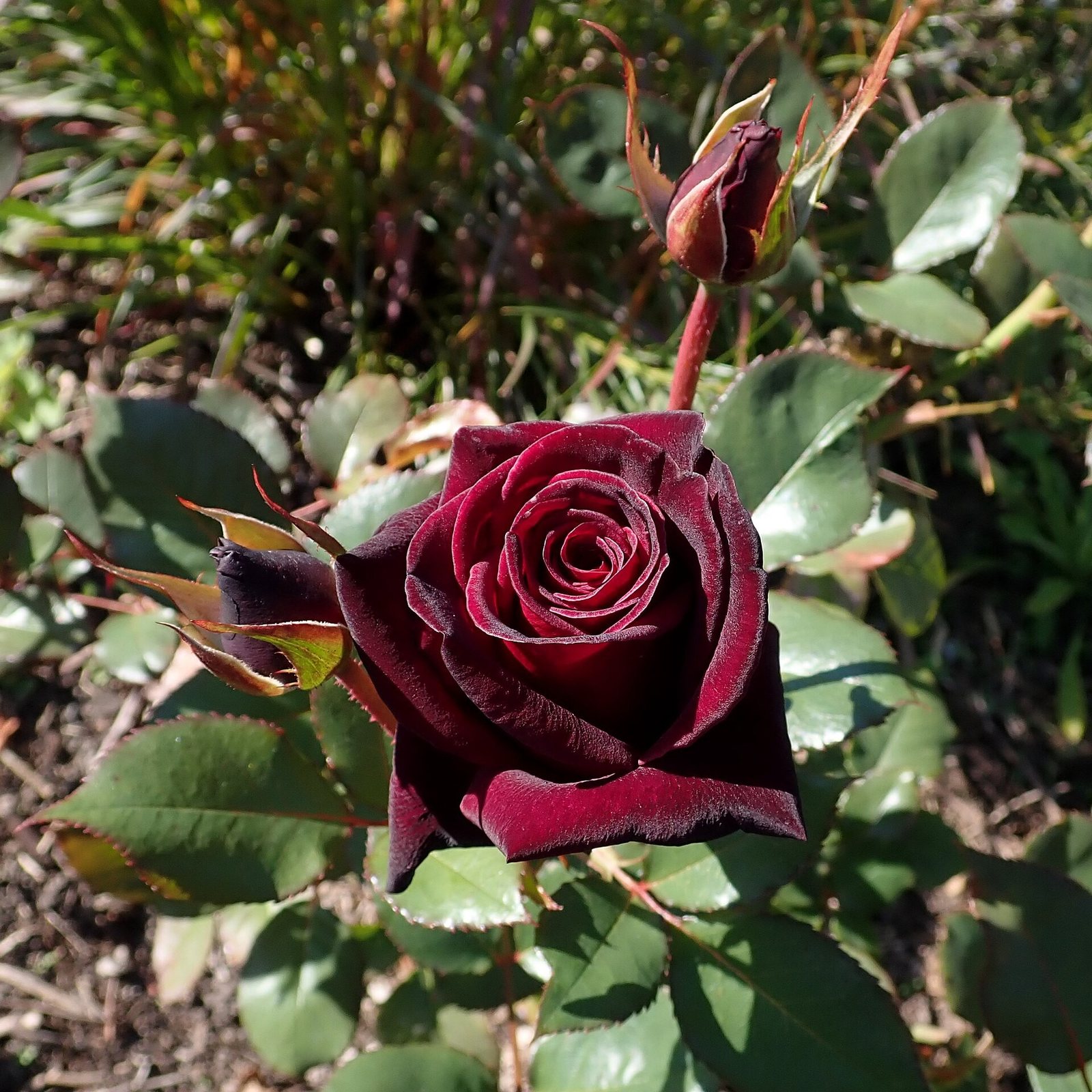
Black roses usually mean mourning, farewell or the end of something, and in a more hopeful reading, rebirth after that ending. The catch is that true black roses do not exist: every "black" rose is either a very dark red cultivar such as 'Black Baccara', a Turkish Halfeti rose grown in unusual soil, or a pale rose that has been dyed or painted.
Exhibit S09 sits in a drawer lined with grey felt, where it looks black. Take it to the window and it turns the color of a bruise on a plum, then the color of old claret, then simply red. That is the whole trick of the black rose. It is a flower defined by a color it never quite reaches, which may be why people load it with so much meaning. What follows is the curator's file on it: what the dark roses actually are, where the famous Turkish ones grow, and what a black rose has been made to say in books, films, flags and the language of flowers.
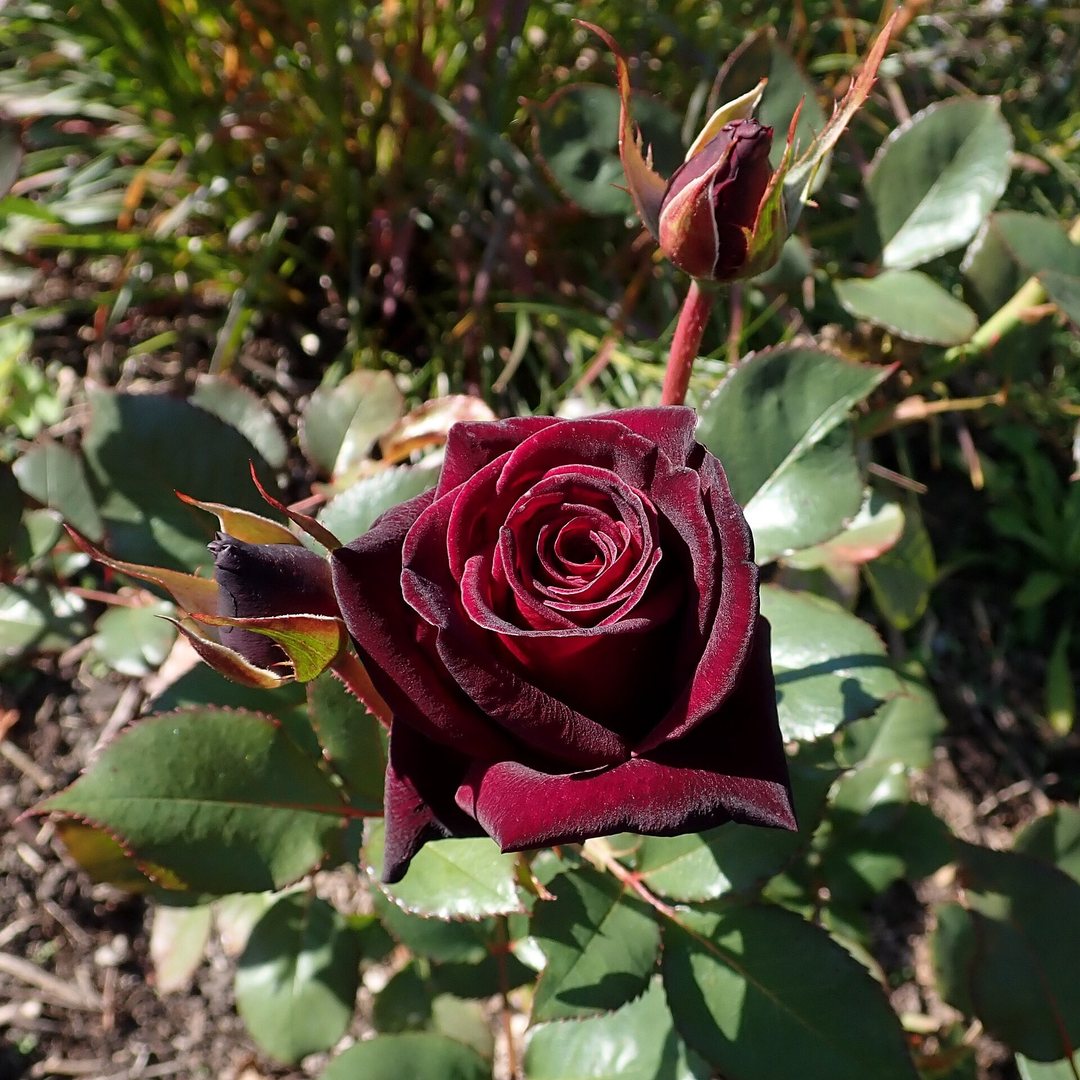
Photo: Salicyna, CC BY-SA 4.0, via Wikimedia Commons
Are black roses real?
Not in the strict sense. Roses do not make a black pigment. Their reds, pinks and purples come from anthocyanins, the same family of pigments that colors blueberries and red cabbage. When a rose packs its petals with a very high concentration of dark red anthocyanin, the petal absorbs most of the light that hits it and reads as near-black, especially in shade or in the bud. Hold the same petal against the sun and the red comes back.
So a "black rose" is one of three things:
- A very dark red cultivar, bred for depth of color.
- A Halfeti rose, a dark red rose from one corner of southeastern Turkey whose color deepens in its home soil.
- A dyed, dipped or painted rose, usually white or red to begin with.
Breeders have chased a true black rose for a long time, much as the characters in Alexandre Dumas's 1850 novel The Black Tulip chase a black tulip for a prize. Neither flower has been delivered by nature. Both remain, in their way, excellent stories.
The darkest real roses: 'Black Baccara', 'Black Magic' and friends
The best-known near-black rose is 'Black Baccara', a hybrid tea bred by Jacques Mouchotte for the French house of Meilland and introduced around 2000. Its buds are so dark they look like burnt sugar. As the flower opens, the velvety petals settle into a deep garnet red. Growers often note that it looks darkest in cool weather and soft light, and lighter in hot sun. Its scent is faint.
'Black Magic', a hybrid tea from the German breeder Tantau introduced in the 1990s, is a similar story: very dark red buds, dark red flowers, and a following among florists as a cut rose. Other names you will see on lists of dark roses include 'Black Beauty' and 'Barkarole'. None of them is black. All of them are very good at pretending, particularly in the evening.
If you grow one, give it what any hybrid tea wants: full sun, rich soil, steady water and good airflow. Just be aware that the sun it needs is also the thing that fades its darkness. This is the black rose's central joke.
Halfeti roses: Turkey's "black" roses
The Halfeti rose, called karagül ("black rose") in Turkish, grows around the small town of Halfeti in Şanlıurfa Province, on the banks of the Euphrates in southeastern Turkey. In summer its flowers are a very dark crimson that can look black in photographs. Locals and visiting botanists credit the color to the area's soil and groundwater, fed by the river, rather than to anything unusual in the plant's genes. Reports say the same roses grown elsewhere come up a more ordinary dark red.
The town's history adds a layer that suits the flower almost too well. Much of old Halfeti was submerged by the reservoir of the Birecik Dam around 2000, and residents moved to a new settlement nearby. Officials and growers gathered seed and plants from the old roses and raised them again in greenhouses and fields near the old town. A rose famous for looking like mourning outlived the drowning of its own hometown. The curator finds this hard to improve on.
Halfeti roses are rare outside Turkey and are mostly sold within the country, so if you see "Halfeti black rose seeds" advertised online in bright, perfectly jet-black photos, be skeptical. Roses grown from seed do not reliably resemble their parents, and true black is not on offer.
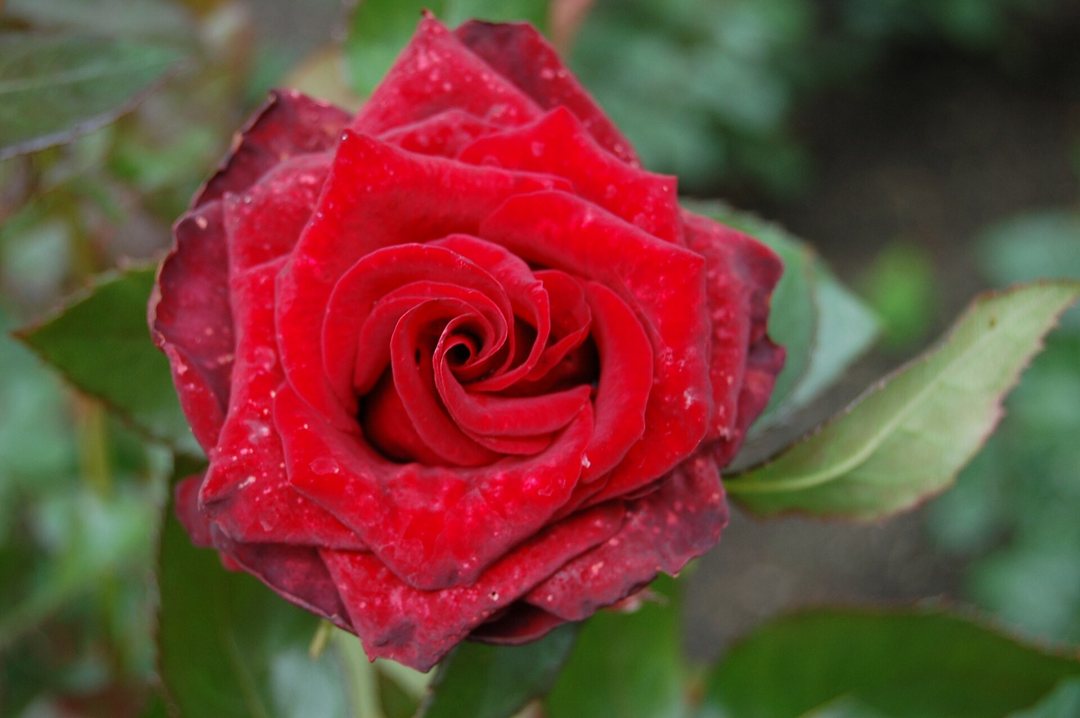
Photo: Huhu, public domain, via Wikimedia Commons
Dyed and painted black roses
Most of the matte, coal-black roses you see in photos are colored by hand. There are two common methods. In the first, a cut white or pale rose stands in water mixed with dark floral dye and draws the color up through its stem, which gives darker veins and edges. In the second, the open flower is dipped in or sprayed with floral paint, which gives a flatter, more even black and sometimes a slight sheen, like a beetle's back.
Preserved roses, which are treated to keep their shape for months, are also often colored black. All of these are decorations rather than food, so keep them away from anything that ends up on a plate.
What does a black rose mean?
Because there were no black roses to speak of when the Victorians wrote their flower dictionaries, the black rose's meanings are mostly modern and built from the color itself. The usual readings are:
- Mourning and death. Black is the color of grief in much of the Western world, so a black rose reads as a flower for loss, and sometimes appears in memorial arrangements.
- Farewell and endings. The end of a relationship, a job, a chapter. A black rose can say "this is over" quite clearly, which is why it is not a casual first-date flower.
- Rebirth and renewal. Endings make room for beginnings. In this reading the black rose is a dark winter before a new season.
- Rebellion and resistance. The black rose is a long-standing symbol of anarchism, and it gives its name to anarchist groups and publishers, including the Black Rose Anarchist Federation, founded in the United States in 2014.
- Gothic romance. Devotion that is dark, intense and a little theatrical. A love that would be at home in a candlelit crypt.
What does it mean when someone gives you a black rose?
Context does nearly all the work. From a goth partner on Valentine's Day, it is probably romance. Sent after an argument, it is probably a goodbye. On a grave, it is grief. If you are giving one, a short note saves a great deal of confusion.
Do black roses mean death?
They can, but not only. Mourning is the oldest and strongest association, yet rebirth, resilience and dark romance are just as common in modern use. You can read more about how flower meanings shift over time in our floriography collection.
Black roses in literature, film and music
The black rose has long been a handy prop for anyone who wants a flower with a shadow. A few of its better-known appearances:
- The Black Rose (1945), a historical adventure novel by Thomas B. Costain, filmed in 1950 with Tyrone Power and Orson Welles.
- Black Rose: A Rock Legend (1979), an album by the Irish band Thin Lizzy.
- Gothic fiction, tattoos and fantasy art, where the black rose stands for doomed love, secrecy or a villain's calling card.
- Political imagery, as the anarchist emblem above.
If dark flowers are your kind of thing, the cabinet has other near-black specimens, including the chocolate cosmos, which smells faintly of cocoa, and the extraordinary black bat flower.
The curator's last word
A black rose is a red rose that has decided to keep a secret. Grow 'Black Baccara' in a cool corner, look for Halfeti roses if you ever reach the Euphrates, and treat the jet-black ones as costume. Whatever you do with it, remember that a black rose is a sentence that needs its context. Add a card, and say which ending, or which beginning, you mean.