
The Skeleton Flower: White Petals That Go Glass in the Rain
The skeleton flower (Diphylleia grayi) is a Japanese woodland plant whose white petals turn transparent when wet. Why it happens, where it grows, and care.
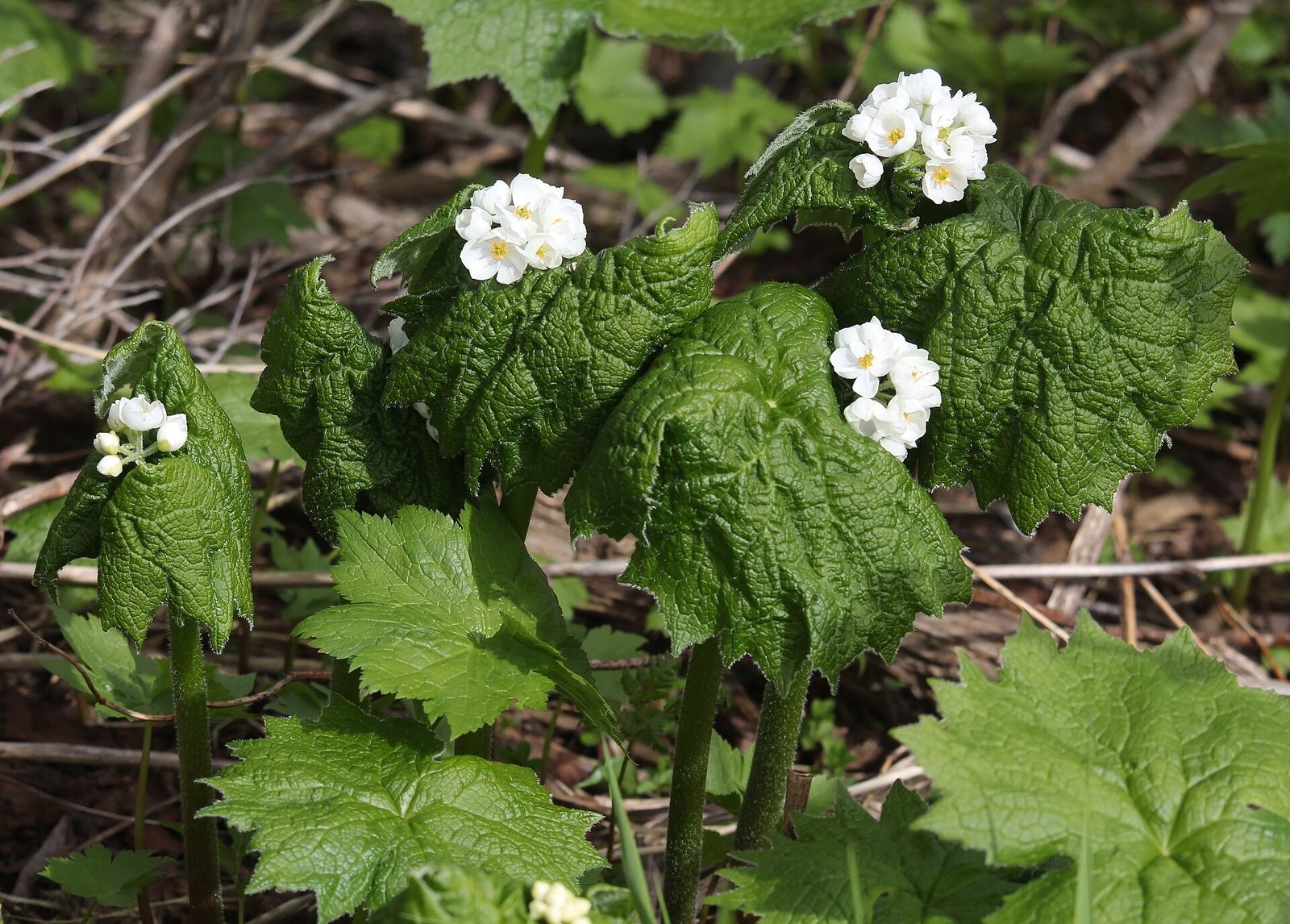
The skeleton flower (Diphylleia grayi) is a small woodland perennial from the cool mountains of Japan and Sakhalin. Its white petals turn almost transparent when rain or heavy dew soaks them, leaving only the fine veins visible, then turn white again as they dry.
Exhibit six is kept under a bell jar with a wet sponge, which is cheating, but the visitors like it. On a dry day it is a modest white flower above two big leaves, the sort of thing you would walk past on a mountain path. Then a shower comes through and the petals go clear as a wet paper lantern, and you can see straight through them to the leaf underneath. When the sun returns, it puts its white coat back on as if nothing happened.
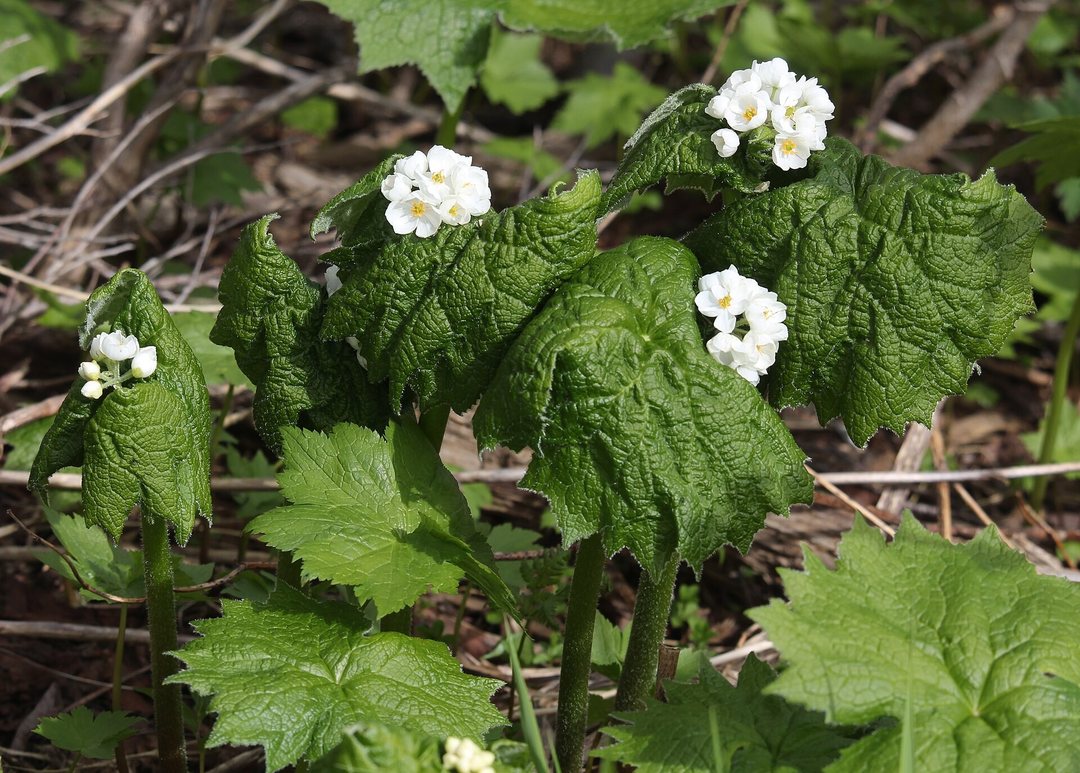
Photo: Alpsdake, CC BY-SA 4.0, via Wikimedia Commons
Why do skeleton flower petals turn transparent?
The petals have no white pigment at all. They look white for the same reason snow and beaten egg white look white: the tissue is loosely built, with small air spaces between the cells, and every boundary between air and cell scatters light in all directions. Scattered light reads as white.
When rain soaks the petal, water moves into those spaces and replaces the air. Water bends light much as the cell contents do, so the light stops bouncing around and passes straight through. The petal turns glassy, and the veins (the "skeleton") stay visible because they are denser than the tissue around them. As the water evaporates, the air comes back and so does the white.
A few practical details for anyone hoping to see it:
- It needs real wetting: a soaking shower or heavy dew, not a light mist.
- It is reversible: the petals return to white once they dry, and can go clear again in the next rain.
- Too much rain ends the show: the petals are thin, and a hard downpour knocks them off.
The same trick of light explains why a white cotton shirt goes see-through in the rain. The skeleton flower simply does it with more grace.
Where does the skeleton flower grow?
Diphylleia grayi is native to northern and central Japan, from Hokkaido through the mountains of northern and central Honshu, with an outlying population on Mount Daisen in western Honshu, and on Sakhalin. It grows in slightly moist woodland high in the mountains, often in the dappled shade under deciduous trees, where summers are cool and the air is damp.
In Japanese it is called sankayō (山荷葉), which refers to its large lotus-like leaves. In Chinese the name is bīng lián, "ice lotus," which is a better poem than most poets manage.
What does the skeleton flower look like?
- Height: up to about 16 inches (40 cm).
- Leaves: two large, deeply lobed leaves on a flowering stem, like a pair of green umbrellas. The genus name Diphylleia means "two leaves."
- Flowers: small clusters of white flowers, each with six rounded petals and a yellow-green center, from May to July in Japan.
- Berries: dark blue to purple, dusted with a whitish bloom, from June to August.
It belongs to the barberry family, Berberidaceae, which makes it a relative of the mayapple.
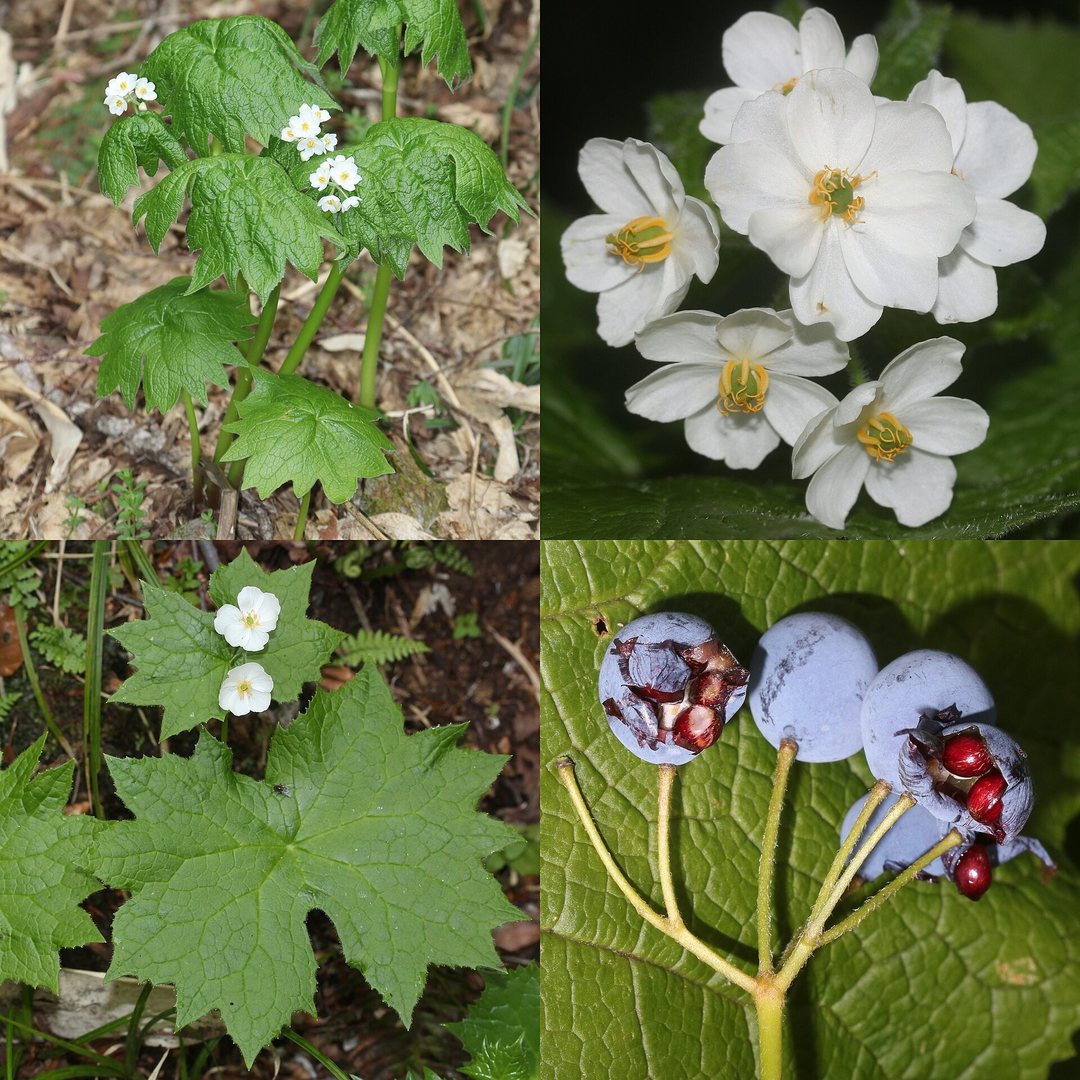
Photo: Alpsdake, CC0, via Wikimedia Commons
Is the skeleton flower real, and is it rare?
It is entirely real. The photos that circulate online, of glassy petals with beads of water on them, are not edited; the effect is ordinary physics in an unusual petal. It is not rare in its home mountains, where it is a well-known wildflower along hiking trails. It is uncommon in gardens outside Japan simply because it is slow, wants cool shade, and does not look like much in a nursery pot.
Do skeleton flowers turn clear every time it rains?
Only while the flowers are open, which is a few weeks in late spring and early summer, and only when the soaking is thorough enough to fill the petal tissue. Outside the flowering season there is nothing to watch but leaves and, later, berries.
Where can you see skeleton flowers in Japan?
In the mountains rather than the cities. Hikers find it in damp woodland and along trails in high country such as Mount Haku on the border of Gifu and Ishikawa, the Hida Mountains (the Northern Alps) in Nagano, and Mount Ibuki in Shiga, mostly from late May into July depending on altitude and snowmelt. Higher up, it flowers later. If you want to see the transparent effect, go on a wet morning and walk slowly, because the flowers are small and sit low under their big leaves. In North America, a few botanic gardens with cool, shady woodland collections grow it too.
Can you grow a skeleton flower in the US?
Yes, in the right conditions, and US nurseries do sell it. Most list it for roughly USDA zones 4 to 9, though it is happiest where summers are cool and damp. It sulks in hot, humid lowland heat and in dry soil.
- Light: partial to full shade. Dappled light under trees is ideal; direct afternoon sun scorches the leaves.
- Soil: moist, rich in leaf mold or compost, and well drained. Soggy ground rots it; dry ground stalls it.
- Growth: slow and clump-forming, spreading gently by rhizomes. It dies back in winter and returns in spring.
- Patience: plants raised from seed can take several years to flower.
- Pests: slugs and snails find the young leaves delicious.
- Company: ferns, hostas, trilliums and other woodland plants that share its taste for shade.
If you grow it, plant it where you can see it from a window on a rainy morning. That is the whole point. Our notes on growing and keeping odd plants live in Made and Kept.
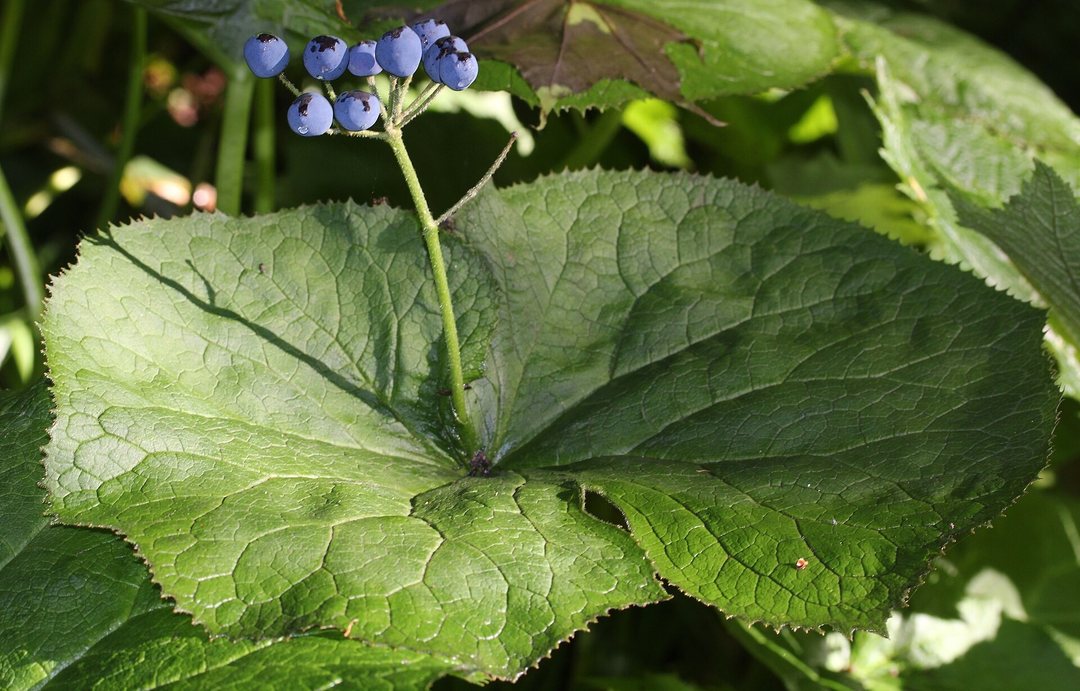
Photo: Alpsdake, CC BY-SA 4.0, via Wikimedia Commons
Relatives: the American skeleton flower's cousin
There are two close relatives. Diphylleia cymosa, called umbrella leaf, is native to the Blue Ridge Mountains of the southern Appalachians, where it grows along stream banks and in moist shady woods. It has the same pair of big umbrella leaves, small white six-petaled flowers in May and June, and blue berries on red stalks. Some botanists now place it in the mayapple genus as Podophyllum cymosum. A third species, Diphylleia sinensis, grows in China.
The Japanese skeleton flower is the one famous for going transparent, and it is the one sold under that name.
Is the skeleton flower poisonous?
Reliable data for this particular species are scarce, so do not eat any part of it, berries included. Several members of the barberry family, mayapple among them, contain toxic compounds, and extracts of the skeleton flower itself have been studied in laboratories for their effects on cells. Treat it as an ornamental and nothing more.
A curator's last word
Most flowers in the cabinet try to be noticed. This one is plain on purpose and only shows its trick when the weather turns bad, which is a quality we admire in people too. If you prefer your curiosities darker, the black bat flower is waiting in the tropical room, and the rest of the strange blooms are along the same corridor.